

Residential and Commercial HVAC Services (Heating, Ventilation, Air Conditioning)
Learn how to replace your HVAC air filter step-by-step. Air Mechanic Services in Katy, TX shows you where filters are located and how to choose the right size.


Residential and Commercial HVAC Services (heating, Ventilation, Air Conditioning)

At Air Mechanic Services, we guide homeowners in Katy, TX through one of the most important—and most overlooked—maintenance tasks: replacing the HVAC air filter. Start by turning off the system, locating the filter slot near the return air vent or air handler, and removing the old filter. Note the size printed on its frame, then insert a new filter with the airflow arrow pointing toward the unit.
Replacing your HVAC air filter starts with locating all filter points in your home, including the return air register and air handler cabinet, since most homes have more than one. Turn off the system, remove the old filter, and note the size printed on the cardboard or plastic frame. Insert the correctly sized replacement with the airflow arrow pointing toward the unit.
Our team at Air Mechanic Services recommends confirming the correct filter size before removal. Disposable filters feature cardboard frames, while reusable filters feature plastic frames—knowing the difference prevents unnecessary trips to the supply store.
Key Takeaways
- Locate all air filters in your home, including return air registers and air handler cabinets. Missing even one filter location means your system is still pulling air through a clogged medium, reducing efficiency and air quality.
- Match the exact filter size before purchasing a replacement to ensure a proper fit. An incorrectly sized filter leaves gaps around the frame, allowing unfiltered air to bypass the media entirely.
- Smart air filters use built-in sensors and a mobile app to track filter condition in real time. This eliminates guesswork and ensures filters are replaced based on actual usage rather than an arbitrary schedule.
- Photograph your filter size label with your smartphone to remember the correct replacement dimensions. Keeping this photo on hand prevents purchasing the wrong size at the supply store.
Why Does HVAC Air Filter Replacement Matter?
Air filter replacement is one of the most consequential maintenance tasks a homeowner can perform. Neglecting this single step shortens the service life of furnaces, air conditioners, and heat pumps—and leaves occupants exposed to airborne contaminants that spread illness and other health hazards. Regular filter changes protect both the equipment and the people inside the building. Filters intercept excess airborne dirt, dust, and contaminants before those particles circulate through living spaces. When filters go unchanged, those contaminants bypass the system and degrade indoor air quality. Beyond health, a clogged filter forces the HVAC system to work harder, driving up utility expenses and accelerating wear on critical components.
Benefits of Consistent Filter Maintenance
- Prolongs the operational life of furnaces, air conditioners, and heat pumps. Consistent replacement prevents premature component wear that leads to avoidable and costly repairs.
- Reduces airborne dirt, dust, and contaminants that cause illness. Cleaner air circulating through your home directly supports better respiratory health for every occupant.
- Supports enhanced energy efficiency and lower utility expenses. A clean filter allows the system to move air freely, reducing the energy required to reach set temperatures.
- Maintains steady airflow and system performance year-round. Consistent airflow pressure reduces strain on the blower motor and extends its operational lifespan.
How Do Different Filter Types Affect Performance?
Understanding filter types is essential before starting any DIY HVAC maintenance. Filters vary in construction and filtration capacity—disposable cardboard-framed filters differ significantly from reusable plastic-framed washable models. Selecting the correct type for your system ensures the equipment operates within its designed parameters.
What Happens When You Skip Air Filter Replacement?
Skipping regular replacement allows contaminants to accumulate and restricts airflow through the system. Restricted airflow forces the HVAC unit to consume more energy to maintain set temperatures, directly increasing utility expenses. Over time, that added strain causes premature component failure—a loss far more substantial than the minimal investment required for routine filter maintenance.
What Tools and Materials Do You Need First?
Air filter replacement requires two items before any work begins: the correct replacement filter and a way to confirm its exact dimensions. Skipping this preparation step forces an unnecessary return trip to the supply store—wasting time and leaving your HVAC system running with a compromised filter longer than necessary.
How Do You Find the Right Filter Size?
The correct filter size is printed directly on the cardboard or plastic frame of the existing filter. Disposable filters use a cardboard frame; reusable, washable filters use a plastic frame. Either frame type displays the length, width, and thickness needed to select a matching replacement. When approaching DIY HVAC maintenance, confirming this size before purchasing is the single most important preparatory step.
What If the Size Is Not Printed on the Filter?
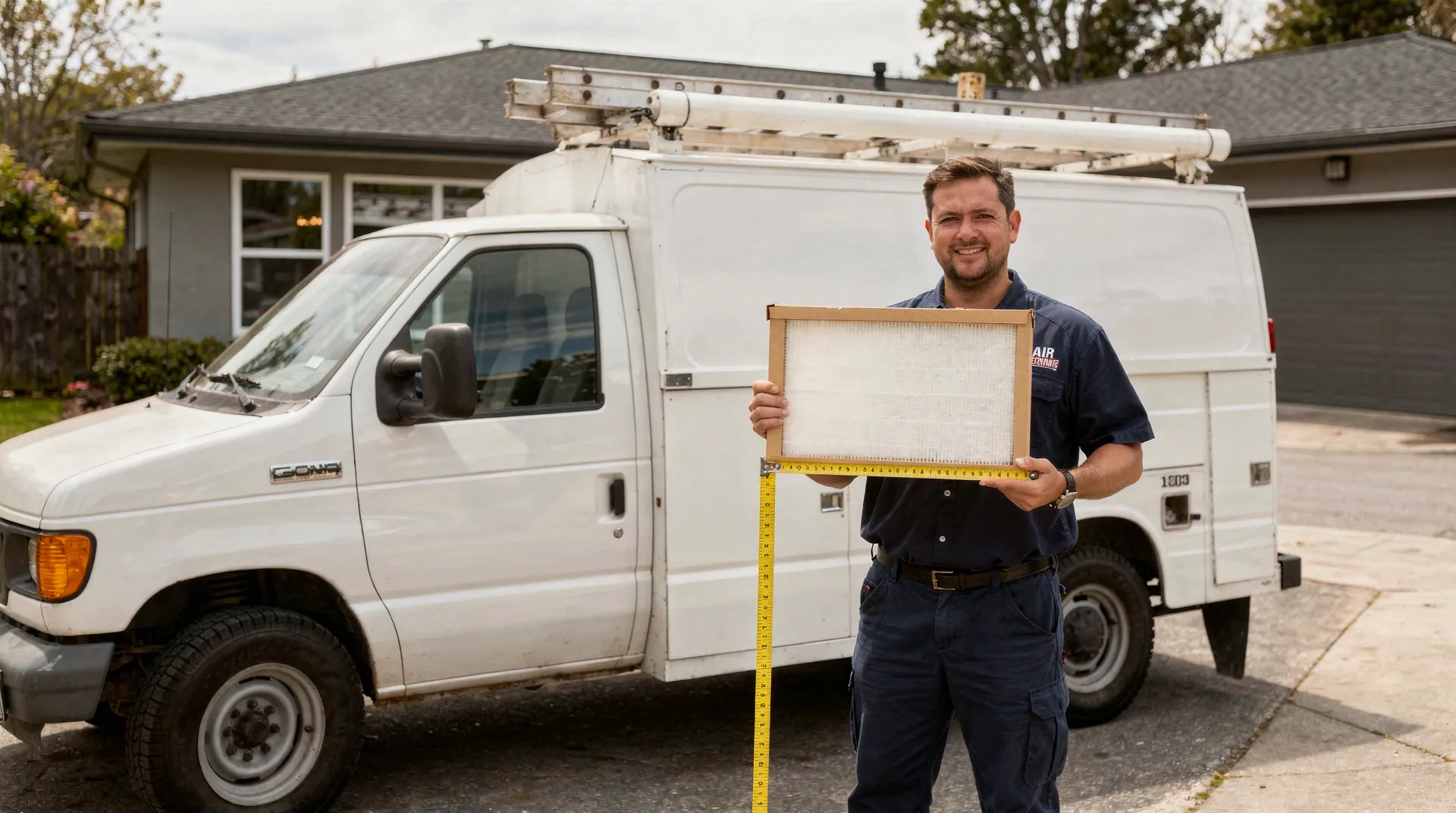
When the size label is worn or missing, use a measuring tape to record the filter's length, width, and thickness. Use those three measurements to select the correct replacement at the supply store. Understanding the range of filter types—from basic fiberglass panels to higher-efficiency pleated options—also helps ensure the replacement filter suits your system's airflow requirements.
Preparation checklist before starting:
- Locate the existing filter and inspect the frame for a printed size. If the size is clearly labeled, photograph it before doing anything else.
- If no size is visible, measure length, width, and thickness with a measuring tape. Record all three dimensions to ensure a precise match at the supply store.
- Photograph the filter size or the measurements with a smartphone to avoid errors at the store. Having a visual reference eliminates the risk of purchasing an incorrect size.
- Purchase the correct replacement filter before removing the old one. Completing the purchase first ensures you are never left with an open filter slot and no replacement on hand.
Completing these steps in order ensures the replacement process proceeds without interruption.

Where Are HVAC Air Filters Typically Located?
HVAC air filters are most commonly found at the return air register, inside the air handler cabinet, and within window air conditioner units. Overlooking any one of these locations means the system runs on a clogged filter—forcing the equipment to work harder, reducing airflow, and shortening the lifespan of the entire system. Most homes contain more than one filter location that requires regular servicing. Skipping even a single location defeats the purpose of routine air filter replacement and leaves contaminants circulating through the living space unchecked.
How Do I Find All the Air Filter Locations in My Home?
Follow these steps to locate every filter in a residential system:
- Identify the return air register. Look for large wall or ceiling grilles—these pull air back into the system and frequently house a filter directly behind the grille cover. Confirm whether a filter is seated behind each grille before moving on.
- Inspect the air handler cabinet. Locate the indoor unit (typically in a closet, attic, basement, or utility room) and check the slot or compartment on the intake side of the cabinet. Some systems have a dedicated filter door that must be unlatched to access the media.
- Check any window air conditioner units. Each window unit contains its own filter, usually accessible by removing the front panel. These filters are often overlooked during routine maintenance and accumulate debris quickly.
Does Every Home Have the Same Filter Setup?
No—filter configurations vary based on system design, age, and filter types installed. A single-story home may have one centrally located return register, while a larger property often has multiple registers across different zones. Understanding the specific layout of a home's system is a foundational step in any DIY HVAC maintenance routine. At Air Mechanic Services, we provide comprehensive HVAC maintenance for residential and commercial systems throughout Katy, TX—ensuring every filter location is properly serviced for peak indoor air quality.
Which Filter Types Are Available for Your System?
Three primary filter types serve residential and commercial HVAC systems: disposable, reusable washable, and smart filters. Selecting the wrong filter type reduces system efficiency and accelerates wear on equipment—a preventable outcome that compromises indoor air quality over time. Disposable air filters are framed in cardboard and designed for single use. Reusable washable air filters use a plastic frame and can be cleaned and reinstalled. Smart filters represent the most advanced option, using built-in sensors to monitor filter condition in real time.
How Do Smart Filters Differ From Standard Options?
Smart air filters integrate built-in sensors that continuously monitor filter life. These sensors connect to a mobile app, keeping homeowners informed about filter condition without manual inspection. Skipping this visibility means filters often run past their effective lifespan, forcing the HVAC system to work harder and driving up energy consumption.
How Do You Identify Which Filter Type Your System Uses?
Air filter replacement starts with identifying the existing filter's frame material. A cardboard frame confirms a disposable filter; a plastic frame indicates a washable, reusable model. For DIY HVAC maintenance, check the side or spine of the installed filter—the size and type are typically printed there. If no filter is present, consult the HVAC unit's owner's manual for the correct specification. At Air Mechanic Services, we are committed to improving indoor air quality and energy efficiency for every home and business we serve in Katy, TX. Choosing the correct filter type is one of the most direct steps toward protecting that investment—reach out to our team for guidance on selecting the right filter for your specific system.
How Do You Remove the Old Filter Safely?
Safe air filter replacement begins with powering down the HVAC system before touching any components. Skipping that step risks pulling unfiltered air through the system and circulating contaminants throughout the home. Air filters work around the clock and carry a finite lifespan. Neglecting timely removal degrades system performance, strains the blower motor, and reduces indoor air quality—losses that compound with every additional day a clogged filter stays in place. With over 25 years of experience serving residential and commercial clients in Katy, TX, Air Mechanic Services has seen firsthand how a single overlooked filter leads to avoidable repairs.
Follow these steps in order:
- Power down the system. Switch the thermostat to "off" and cut power at the breaker before opening any access panel. Cutting power at both points ensures the blower does not activate unexpectedly during filter removal.
- Locate the filter compartment. Check the return air register, the air handler cabinet, or any secondary intake grilles—some homes have more than one filter location. Confirming all locations before beginning prevents the system from running on a missed clogged filter.
- Note the filter size and airflow arrow. The size is printed on the cardboard or plastic frame. Photograph it before removal so the correct replacement is purchased without error.
- Slide the old filter straight out. Pull slowly and steadily to avoid shaking loose accumulated dust into the air stream. Rapid removal disturbs debris and sends contaminants directly into the system.
- Seal the old filter immediately. Place the used filter directly into a plastic bag and dispose of it to prevent debris from re-entering the space. Sealing the bag immediately contains allergens and fine particulate matter.
- Inspect the filter slot. Wipe any visible dust from the housing before inserting the new filter. A clean housing ensures the new filter seats flush and performs as designed.
How Do You Know When a Filter Needs Replacing?
Both obvious and subtle indicators signal that a filter has reached the end of its service life. Reduced airflow, visible gray buildup on the filter surface, and increased dust on nearby vents are the clearest signs. Less obvious cues include rising energy consumption and more frequent system cycling—both of which indicate the system is straining against a restricted filter.
Does Filter Type Affect How Removal Is Handled?
Understanding filter types matters for safe DIY HVAC maintenance. Disposable filters with cardboard frames go straight into the trash after removal—no cleaning required. Reusable filters with rigid plastic frames require washing and drying before reinstallation—never reinstall a wet filter, as moisture introduces the risk of mold growth inside the air handler.
How Do You Install the New Filter Correctly?
Air filter replacement follows a precise sequence: locate the directional arrow printed on the filter frame, align that arrow with the airflow path in the system, and slide the filter firmly into the housing. Skipping this orientation step forces the HVAC system to work against restricted airflow, accelerating wear and driving up repair expenses over time.
What Does the Arrow on the Filter Mean?
Every filter frame carries a printed arrow that indicates the correct DIY HVAC airflow direction. The arrow must point toward the blower motor—away from the return air duct—so air moves through the filter media in the intended direction. Installing the filter backward reduces filtration efficiency and strains the system, exactly the kind of early problem that becomes more expensive to resolve the longer it goes unaddressed.
Do Different Filter Types Require Different Installation Steps?
Understanding filter types matters before installation begins. Disposable filters with cardboard frames and reusable filters with plastic frames share the same directional rule—the arrow always points toward the blower. Reusable models require cleaning before reinstallation rather than outright replacement—confirm the filter type before proceeding so the correct installation method is applied from the start.
Follow these steps to install the new filter correctly:
- Power down the HVAC system at the thermostat before opening the filter housing. Cutting power prevents the blower from activating while the filter slot is exposed.
- Remove the old filter carefully to avoid releasing trapped dust and debris into the air handler. Slow, steady extraction keeps accumulated particulate matter contained within the filter media.
- Identify the directional arrow printed on the new filter's frame. This arrow is the single most important installation indicator—orient the filter before sliding it into place.
- Orient the filter so the arrow points toward the blower motor and away from the return air duct. Correct orientation ensures air passes through the filtration media rather than around it.
- Slide the filter fully into the housing until the frame seats flush with no gaps. Gaps around the frame allow unfiltered air to bypass the media entirely, defeating the purpose of replacement.
- Close and secure the access panel before restoring power to the system. A properly secured panel maintains the pressure differential required for the filter to function as designed.
Addressing potential HVAC problems early—including a misaligned or neglected filter—saves time and reduces repair expenses while providing lasting peace of mind. Our AC tune-up and AC maintenance services at Air Mechanic Services are designed to ensure peak performance and comfort year-round for every home and business we serve in Katy, TX.
How Often Should You Schedule Filter Replacement?
Air filter replacement frequency depends on filter type, household conditions, and system usage—but scheduling filter changes before peak cooling season protects both indoor air quality and equipment longevity. Skipping regular filter maintenance forces your HVAC system to work harder, accelerating wear and driving up energy consumption. We recommend beginning filter checks well ahead of summer heat in Katy, TX. Starting early secures a comfortable home environment before demand peaks, preventing unexpected breakdowns and keeping indoor conditions consistently comfortable throughout the season.
What Factors Determine How Frequently Filters Need Changing?
Understanding filter types is essential before establishing a replacement schedule. Thinner fiberglass filters typically require more frequent attention than thicker pleated or high-efficiency options. Homes with pets, occupants with allergies, or high dust levels need more frequent changes than average households—conditions common in Katy, TX given seasonal humidity and pollen levels.
Use the following guide to align replacement intervals with filter type:
How Does Filter Replacement Connect to a Broader AC Tune-Up?
DIY HVAC maintenance—including filter replacement—forms the foundation of a complete seasonal tune-up. An effective summer AC tune-up improves system efficiency and extends the operational lifespan of the unit. Filter replacement alone does not substitute for a full professional inspection, but neglecting filters undermines every other maintenance step. Our team at Air Mechanic Services integrates filter assessment into every comprehensive AC tune-up, ensuring Katy, TX homeowners enter the cooling season with a system performing at full capacity.
When Should You Call a Professional HVAC Contractor?
Call a professional HVAC contractor when system performance declines, unusual sounds or odors emerge, or routine air filter replacement and basic DIY HVAC maintenance fail to restore normal operation. Delaying professional service risks compounding damage—a minor issue left unaddressed can escalate into a full system failure, requiring far more substantial expenditure than a timely service call. Air Mechanic Services provides expert AC maintenance, heating service, and heating inspection for homeowners and businesses in Katy, TX. Recognizing the right moment to call our team protects your investment and preserves indoor comfort year-round.
What signs indicate your HVAC system needs professional attention?
Watch for these conditions that signal a professional inspection is necessary:
- Identify the symptom. Note whether the issue involves weak airflow, inconsistent temperatures, unusual noises, or persistent odors after a recent filter change. Documenting the symptom type helps our team at Air Mechanic Services diagnose the root cause more accurately on the first visit.
- Check your filter first. Confirm the correct filter types are installed and that the filter is not clogged—a restricted filter reduces system efficiency immediately. A clean filter rules out the most common and easily resolved cause before escalating to a professional visit.
- Document the pattern. Record when the problem occurs (startup, continuous operation, or shutdown) so our team can diagnose the root cause accurately. A clear timeline of symptoms allows for faster, more targeted diagnosis and reduces the time your system spends underperforming.
- Contact Air Mechanic Services. Reach our team to schedule a comprehensive HVAC inspection at your Katy, TX property. Early intervention consistently results in lower repair scope and faster restoration of normal system operation.
When does heating service require a professional rather than a DIY fix?
Heating repair and heating inspection fall outside safe DIY scope when the system involves gas components, electrical connections, or refrigerant handling. Air Mechanic Services delivers reliable heating service that addresses these complex repairs with the precision and safety protocols each job demands. Attempting these repairs without proper equipment increases the risk of system damage and safety hazards—calling our team early is always the more prudent choice.
FAQ
Where do you find the correct replacement filter size?
The correct filter size is printed directly on the cardboard or plastic frame of your existing filter. Photograph the label with your smartphone to remember the exact dimensions before purchasing a replacement.
What happens if you skip regular air filter replacement?
Skipping replacement allows contaminants to accumulate and restricts airflow, forcing the HVAC unit to consume more energy and accelerating premature component failure. The compounding effect of a neglected filter can lead to repairs that far exceed the modest investment of routine maintenance.
How do you tell a disposable filter apart from a reusable one?
Disposable filters feature cardboard frames, while reusable filters feature plastic frames. Identifying the frame material confirms which type your system uses before you purchase a replacement—and determines whether the old filter is discarded or cleaned for reinstallation.
Ready to Keep Your HVAC System Running at Its Best?
At Air Mechanic Services, we have served homeowners and businesses in Katy, TX for over 25 years—and we know that a properly maintained filter is the foundation of a healthy, efficient HVAC system. Whether you need guidance on the right filter for your system, a full seasonal tune-up, or a comprehensive inspection, our team is ready to help. Reach out to Air Mechanic Services today and let us protect your comfort all year long.
Other Blogs

•WHY US
Why Homeowners Choose Us for custom HVAC work
Ann N.
While it was expensive to replace my HVAC I loved with with and They delivered when promised and were very diligent about making sure I understood how the system operated. The knowledge level was SO MUCH HIGHER than anyone else I had received a quote from. I would highly recommend them for HVAC replacement.
Ed T.
americanairaz was very professional and did a thorough job on the installation as well as the annual maintenance check. I would highly recommend All American Air to anyone.
Renaye F.
Great service, professional and affordable company. Very knowledgeable and also took the time to explain everything in detail. Which I appreciated very much. Would definitely recommend.
John C.
First class shop. Very clean install ,would recommend to a friend. Excellent equipment,Mitsubishi is number one in industry.and most efficient seer rating.thank you

Read More Blogs
Explore the world of creative writing and discover how words can paint vivid pictures in the minds of readers.