


The Sticky Truth About Summer Storms and Indoor Comfort
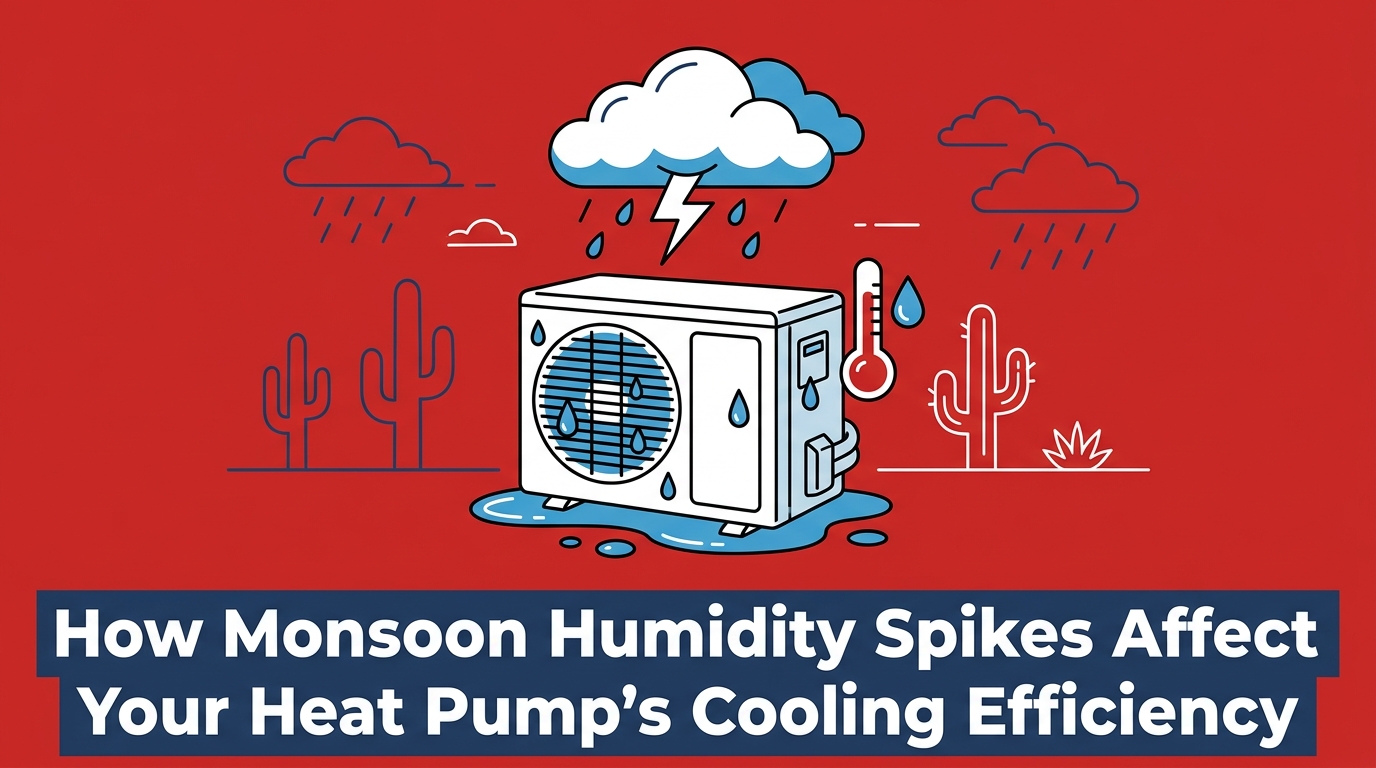
Before the heavy clouds roll across the desert, knowing exactly how monsoon humidity spikes affect your heat pump's cooling efficiency is the key to maintaining a comfortable home. In Benson, AZ, the sudden arrival of late summer storms transforms the local climate overnight. At All American Air, our team sees this extreme weather shift create a very specific, concrete problem for local homeowners every July: your cooling equipment runs constantly, blowing cold air into the rooms, yet the house still feels heavy, warm, and stubbornly sticky.
This sudden drop in comfort forces a critical decision point. Most people instinctively walk over to the thermostat and drastically lower the target temperature, hoping to force the house to cool down by sheer force. However, understanding the mechanics behind modern heat pump systems reveals why cranking down the dial often makes the situation worse. The sluggish performance you feel during a downpour is rarely a mechanical failure. Instead, it is a temporary limitation of physics. Your equipment is suddenly fighting a massive influx of airborne moisture, shifting its primary job from dropping the temperature to wringing water out of the indoor air.
Sensible Heat vs. Latent Heat: Why Your System Works Overtime
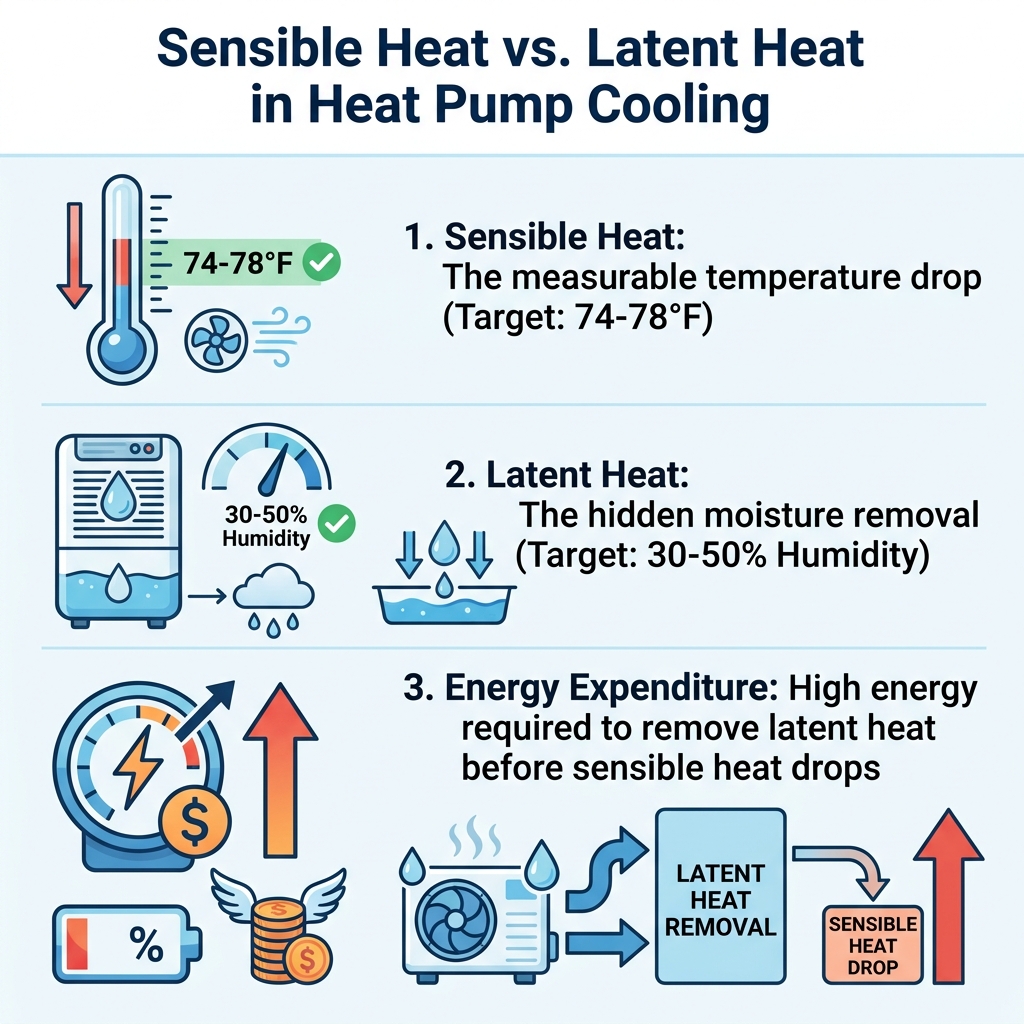
To understand why your home feels so uncomfortable during a storm, you have to look at the two different types of heat your system battles every day. Sensible heat is the temperature you can actually measure and read on your thermostat. Latent heat is the hidden thermal energy stored inside airborne moisture. When the July monsoon shift arrives, the amount of latent heat inside your home skyrockets, forcing your cooling equipment to work overtime just to keep up.
The Invisible Load of Latent Heat
Moisture acts like a massive thermal battery, holding heat suspended in the air. When indoor humidity rises above the ideal range of 30 to 50 percent, the air feels significantly warmer than the actual thermostat reading. This is because high humidity prevents your body's natural cooling process—sweating—from evaporating effectively. Your heat pump must expend massive amounts of electrical energy to remove this invisible load of latent heat before the sensible heat (the actual room temperature) can begin to drop. Until the moisture is cleared, the house will continue to feel sticky and warm, regardless of what the thermostat says.
The Physics of Evaporator Coils
Dehumidification is not a separate feature of your heat pump; it is a byproduct of the cooling cycle. Warm, moist indoor air is pulled through your return vents and passed over the freezing cold evaporator coils inside your air handler. As the warm air hits the cold metal, the moisture condenses into liquid water—much like beads of sweat forming on a glass of ice water on a hot day. This condensation drips into a drain pan and is carried out of the house. Extracting water through condensation takes significantly more time and energy than simply chilling dry air. During a heavy storm, the sheer volume of water passing over those coils slows the entire cooling process down.

The Shock to the System: From Dry Desert to Tropical Moisture
The extreme climate transition in Benson, AZ puts a unique strain on residential cooling equipment. For the first half of the summer, local heat pumps operate in single-digit humidity. They are sized and calibrated to combat extreme, dry heat. When the weather pattern changes, the environmental whiplash forces these systems to adapt to a completely different type of cooling load.
Sudden barometric drops and massive humidity surges change the indoor air pressure and the density of the air circulating through your ductwork. A system that easily maintained 72 degrees in dry June weather will suddenly struggle to hold 76 degrees in late July. This sluggishness is a natural reaction to the extreme moisture load, not a sign that your compressor is failing.
• Average Humidity — June (Dry Desert Heat): Often below 10% — Late Summer (Monsoon Moisture): Can spike above 60% during storms
• Primary System Task — June (Dry Desert Heat): Rapidly dropping sensible heat — Late Summer (Monsoon Moisture): Extracting heavy latent heat (water)
• Evaporator Coil Load — June (Dry Desert Heat): Light condensation, fast cooling — Late Summer (Monsoon Moisture): Heavy condensation, slower cooling
• Indoor Comfort Challenge — June (Dry Desert Heat): Fighting extreme outdoor temperatures — Late Summer (Monsoon Moisture): Combating heavy, sticky indoor air
Recognizing this seasonal shift helps set realistic expectations for your equipment. When the July monsoon shift hits, the sudden influx of tropical moisture fundamentally changes how heat transfers through your home. The air conditioner has to wring gallons of water out of the indoor air every single day just to make the rooms feel tolerable.
The Thermostat Trap: Why Lowering the Temperature Makes It Worse
When the living room feels like a swamp, our technicians at All American Air frequently see homeowners give in to the natural instinct to walk over to the wall and drop the thermostat down to 68 degrees. You want the system to run harder and blast more cold air. However, dropping the temperature drastically is a trap. It wastes energy, stresses the blower motor, and rarely speeds up the dehumidification process. In fact, depending on the different types of HVAC systems installed in your home, forcing the unit to run constantly at a low temperature setting can lead to catastrophic mechanical failures.
The Risk of Frozen Coils
The most immediate danger of drastically lowering your thermostat during high humidity is freezing the evaporator coils. When the system runs non-stop trying to reach an impossibly low temperature, the massive amount of moisture condensing on the coils can begin to freeze. Once a thin layer of ice forms, it blocks the airflow over the metal fins. This causes the internal temperature to drop even further, accelerating the ice buildup until the entire coil is encased in a solid block of ice. A frozen system completely stops cooling and dehumidifying, leaving you trapped in a hot, sticky house with a unit that needs hours to thaw before it can be safely restarted.
The Energy Efficiency Penalty
Forcing your system beyond its latent cooling capacity carries a massive energy penalty. When you set the thermostat unnaturally low during a storm, the compressor runs continuously, drawing peak electrical amperage hour after hour. Because the system is struggling to remove the latent heat, that extra electricity does not translate into a cooler house. Consistency always beats drastic temperature drops. Maintaining a steady, reasonable temperature allows the system to cycle normally, steadily pulling moisture out of the air without driving your utility bills through the roof.
Actionable Steps to Manage Indoor Humidity During a Storm
Instead of fighting the weather with your thermostat dial, there are specific, actionable steps you can take to optimize your indoor comfort. By adjusting how you operate the equipment, you can help the system remove moisture more effectively while protecting the mechanical components from unnecessary wear and tear. In our years of servicing cooling equipment throughout Benson, AZ, we've found that maintaining indoor comfort requires a proactive approach to storm season.
Optimizing Thermostat Settings
• Set the fan to Auto: Never leave your thermostat fan setting on 'On' during high humidity. When the compressor cycles off, an 'On' fan will continue blowing air over the wet evaporator coils, re-evaporating the water and blowing that moisture straight back into your living room. The 'Auto' setting ensures the fan only runs when the system is actively cooling.
• Maintain a steady temperature: Keep your thermostat set between 74 and 78 degrees. This provides a realistic target for the system, allowing it to run long enough to pull water out of the air without running so long that the coils freeze over.
• Leverage smart controls: If you have a smart thermostat with an overcool-to-dehumidify feature, enable it. This allows the system to drop the temperature one or two degrees below your set point specifically to extract extra humidity from the air.
Airflow and Filtration
• Replace restricted filters: A dirty air filter severely hampers your system's ability to remove moisture. Restricted airflow means less warm air crosses the coils, which slows down the condensation process. Check and replace your filters before the storm season peaks.
• Open interior doors: Keep bedroom and office doors open as much as possible. This promotes whole-home air circulation, preventing humid air from becoming trapped in isolated, stagnant rooms.
• Explore supplemental systems: If your home consistently struggles with moisture despite proper settings, it may be time to look into dedicated indoor air quality solutions, such as whole-home dehumidifiers that work alongside your existing heat pump.
Recognizing the Difference Between Weather Strain and Mechanical Failure
Our service crews field countless calls during the summer monsoons, and because heat pumps naturally slow down during heavy rain, we know it can be difficult to tell if your system is just dealing with weather strain or if it actually needs professional attention. As the regional climate shifts, knowing what to look for can save you from an emergency breakdown in the middle of the night. A temporary lag in cooling during a downpour is normal physics at work. However, there are specific warning signs that indicate a true mechanical failure.
• Warm air from the vents: If the air blowing from your registers feels actively warm or room-temperature during a cooling cycle, the compressor may have failed or the system may be critically low on refrigerant.
• Ice on the outdoor unit: While indoor coil freezing is common with high humidity and low thermostat settings, ice forming on the outdoor compressor during the summer indicates a severe airflow or refrigerant issue.
• Loud, grinding noises: Heavy rain shouldn't change the sound of your equipment. Grinding, squealing, or violent rattling noises point to failing motor bearings or fan blade obstructions.
• Failure to recover: The most telling sign of a problem is what happens after the storm passes. If the humidity drops outside but your heat pump still fails to recover the indoor temperature after several hours, you likely need a professional diagnostic.
If you notice any of these severe symptoms following the July monsoon shift, do not wait for the system to fix itself. Shut the unit off to prevent further compressor damage and reach out for professional AC repair in Benson to get the system safely back online.
Frequently Asked Questions About Heat Pumps and High Humidity
Why is my heat pump not dehumidifying?
If your system isn't removing moisture, the most common culprit is the thermostat fan being set to 'On' instead of 'Auto'. When the fan runs continuously, it blows the collected condensation right back into the house before it can drain away. Additionally, a heavily clogged air filter or an oversized unit that short-cycles will fail to run long enough to properly extract latent heat from the air.
Should I lower my AC temperature when it is humid?
No, you should avoid drastically lowering the temperature during high humidity events. Dropping the thermostat forces the system to run continuously, which wastes a massive amount of energy and significantly increases the risk of freezing the indoor evaporator coils. It is much better to maintain a steady, realistic temperature and allow the system to cycle normally.
How does humidity affect heat pump efficiency?
High humidity drastically reduces the perceived efficiency of your heat pump because the system must expend energy to remove airborne water before it can effectively lower the room temperature. This latent heat load forces the compressor to work harder and longer to achieve the same sensible temperature drop that it would achieve quickly on a dry day.
Do heat pumps work well in high humidity?
Yes, modern heat pumps are excellent at dehumidifying, provided they are sized correctly for the home and properly maintained. However, during sudden, extreme moisture spikes—like a severe summer storm—even the best systems will experience a temporary lag as they process the sudden influx of latent heat.
How long does it take for a heat pump to catch up after a storm?
Once the heavy outdoor moisture subsides, a properly functioning heat pump should be able to recover the indoor temperature within two to three hours. If your system runs continuously for half a day after the weather clears and still cannot reach the set temperature, you may have a frozen coil or a refrigerant leak.
Can high humidity cause my heat pump to freeze up?
Yes, excessive indoor moisture combined with poor airflow or an unnaturally low thermostat setting can cause condensation to freeze on the indoor evaporator coils. Once this ice begins to form, it blocks airflow completely, leading to a total loss of cooling power until the system is turned off and allowed to thaw.
Ensure Your System is Ready for the Season
Understanding how latent heat impacts your equipment is the best way to manage expectations and stay comfortable during extreme weather shifts. Remember that adjusting your fan settings and maintaining a steady target temperature is always safer and more effective than drastically dropping the thermostat. If your equipment consistently struggles to keep the house dry and comfortable, or if you suspect the heavy weather has taken a mechanical toll, it is time to bring in professional backup. Schedule a thorough inspection and heat pump service in Benson to ensure your system is fully prepared to handle whatever the next wave of storms brings your way.
Other Blogs

•WHY US
Why Homeowners Choose Us for custom HVAC work
Ann N.
While it was expensive to replace my HVAC I loved with with and They delivered when promised and were very diligent about making sure I understood how the system operated. The knowledge level was SO MUCH HIGHER than anyone else I had received a quote from. I would highly recommend them for HVAC replacement.
Ed T.
americanairaz was very professional and did a thorough job on the installation as well as the annual maintenance check. I would highly recommend All American Air to anyone.
Renaye F.
Great service, professional and affordable company. Very knowledgeable and also took the time to explain everything in detail. Which I appreciated very much. Would definitely recommend.
John C.
First class shop. Very clean install ,would recommend to a friend. Excellent equipment,Mitsubishi is number one in industry.and most efficient seer rating.thank you

Read More Blogs
Explore the world of creative writing and discover how words can paint vivid pictures in the minds of readers.