


Why Traditional Blast Cooling Fails Sahuarita's Afternoon Sun
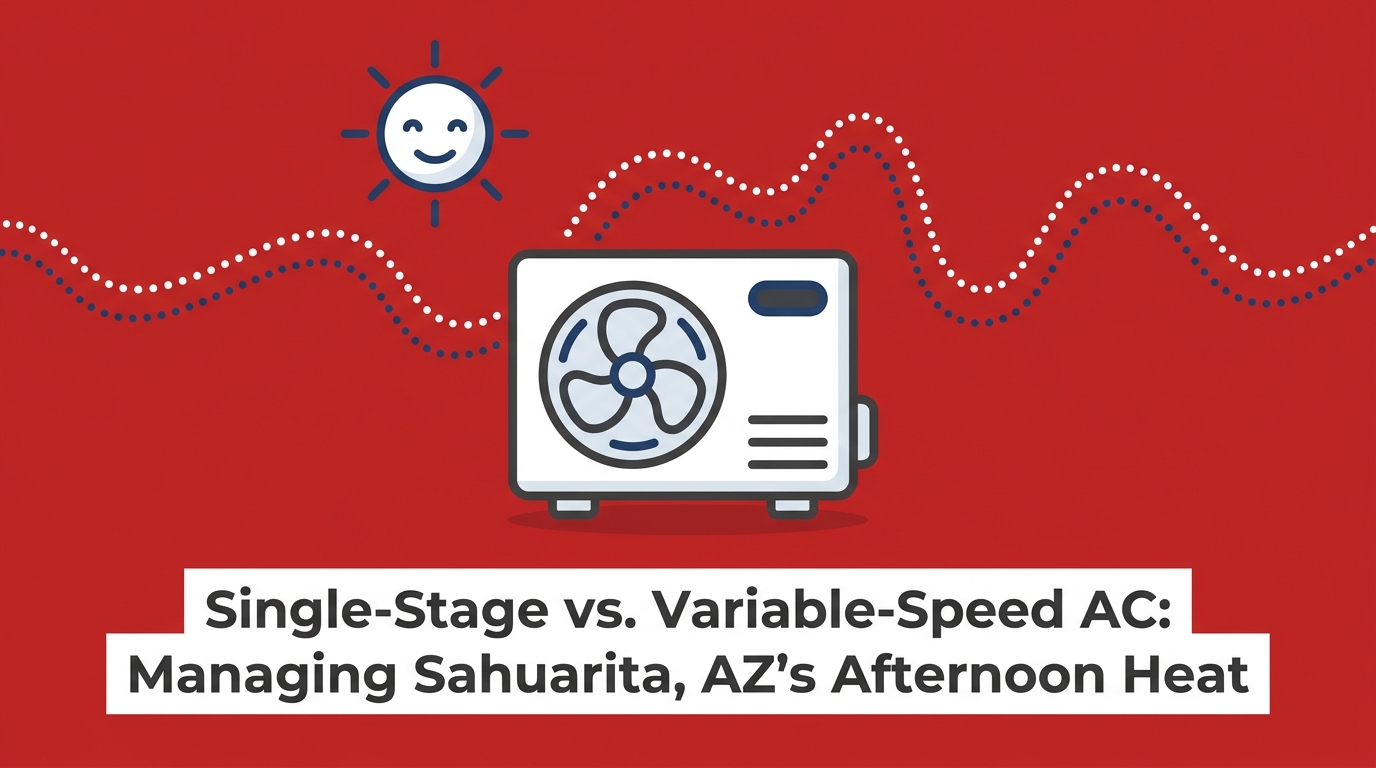
Your air conditioner is roaring at full volume, blasting frigid air into the central hallway, yet the west side of your house still feels like an oven. At All American Air, we find this to be a frustrating and incredibly common scenario for homeowners across Benson, Sahuarita, and the surrounding areas. When evaluating a single-stage vs. variable-speed AC for managing Sahuarita's afternoon heat, you have to look beyond basic temperature readings and understand how rapid solar heat gain actually affects your living space during triple-digit summer afternoons.
Traditional air conditioning systems operate on a simple binary principle: they are either running at maximum capacity or completely shut off. While this forceful blast of cold air might eventually satisfy the thermostat located in the center of your hallway, it completely fails to address the perimeter of your home. The result is a house filled with extreme temperature zones—freezing in the shaded corridors, but stuffy and uncomfortable in the rooms taking the brunt of the sun. For Sahuarita homes with heavy afternoon sun exposure, this start-and-stop cycle simply cannot keep up with the continuous thermal load pressing against the exterior walls.
Solving this problem requires a fundamental shift in how our team approaches comprehensive Air Conditioning Services. Instead of fighting the heat with aggressive blasts of cold air, our modern cooling strategies focus on continuous air circulation and precise capacity matching. Deciding whether to stick with standard equipment or upgrade to variable-speed technology is the most critical choice you will make when planning an AC installation in Sahuarita, AZ. It is the difference between simply surviving the summer and actually enjoying consistent comfort in every room of your house.
The Mechanics: Single-Stage vs. Variable-Speed Compressors
To understand why certain systems fail to keep your home comfortable during the July monsoon peak heat, our technicians often tell customers to look at the mechanics inside the outdoor unit. The compressor is the heart of your air conditioning system, responsible for pumping refrigerant through the lines to absorb and release heat. How that compressor operates dictates everything from your daily comfort to your monthly energy consumption.
The "All or Nothing" Approach of Single-Stage Cooling
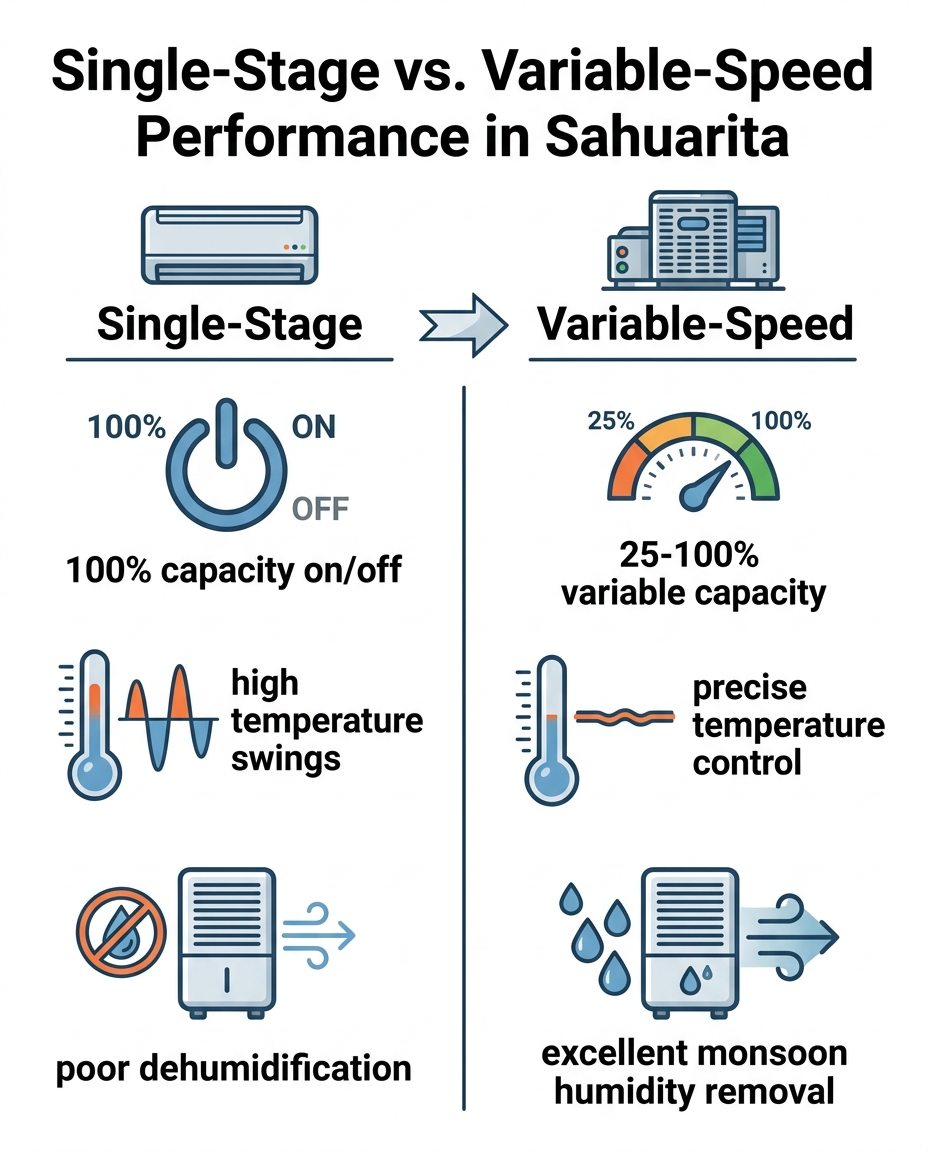
A single-stage compressor is the traditional standard for residential cooling. It has exactly one operational speed: 100 percent capacity. When your thermostat detects that the indoor temperature has risen above your set point, it sends a signal to the single-stage unit to turn on. The system surges to life, drawing a massive amount of electrical current to start the compressor, and pumps maximum cooling power into your ductwork.
Once the thermostat registers the target temperature, the entire system shuts down completely. This creates a rapid on-and-off cycling process known as "short cycling." While this brute-force method eventually cools the air, it creates massive temperature swings. The air is too cold while the unit is running, and the house quickly becomes warm and stagnant the moment it shuts off. Furthermore, the massive energy spikes required to constantly restart a heavy compressor put immense wear and tear on the electrical components.
The "Cruise Control" Precision of Variable-Speed Technology
Variable-speed compressors operate on a completely different philosophy. Instead of turning on and off, these advanced units can adjust their cooling output in tiny increments. A true variable-speed compressor can operate at capacities as low as 25 to 30 percent of its maximum power.
Think of it like driving a car on the highway. A single-stage system is like slamming on the gas pedal until you hit 75 miles per hour, then turning the engine completely off and coasting until you drop to 55, only to slam on the gas again. A variable-speed system acts like cruise control, gently adjusting the throttle to maintain a perfect, steady 65 miles per hour. By running continuously at a very low, energy-efficient speed, variable-speed units provide constant air circulation without the massive power spikes of hard starts. For homeowners researching the different types of HVAC systems available today, understanding this fundamental mechanical difference is the first step toward achieving whole-home comfort.
Managing Solar Heat Gain in West-Facing Rooms
The Problem: It is 4:00 p.m. in the middle of summer. Your thermostat is set to a comfortable 74 degrees, and the air conditioning unit has just shut off. However, the bedrooms and living spaces facing the west and south are rapidly heating up. Within twenty minutes, those specific rooms feel five to ten degrees warmer than the rest of the house, creating an uncomfortable, uneven living environment.
The Cause: This frustrating phenomenon is caused by solar heat gain. The specific trajectory of the afternoon sun in Sahuarita means that intense UV rays pound against west-facing walls and windows for hours on end. The structural materials of your home—the stucco, the framing, the drywall—absorb this heat and radiate it into the interior rooms. Because a traditional single-stage system shuts off the moment the central hallway reaches the target temperature, the air circulation stops entirely. The shaded rooms stay cold, while the sun-exposed rooms are left to bake in stagnant air. For Sahuarita homes with heavy afternoon sun exposure, this creates a daily battle for comfort.
The Solution: Based on our years of experience servicing desert homes, the key to managing intense localized heat gain is continuous air mixing. Variable-speed systems solve this problem by refusing to shut off. Instead of blasting cold air and stopping, the system dials down to a low, quiet speed and keeps the blower motor running. This continuous operation constantly pulls the hot, stagnant air out of the west-facing rooms and replaces it with gently conditioned air. By maintaining a steady flow of circulation, the system effectively neutralizes the continuous thermal load of the afternoon sun, eliminating hot spots and ensuring every room in the house remains at the exact temperature you set.
Winning the Battle Against Monsoon Humidity Spikes
Southern Arizona is famous for its dry heat, but late summer brings a completely different challenge. The July and August monsoon season introduces a dual-threat of high temperatures and rising dew points. When the humidity spikes, the air inside your home feels heavy, sticky, and deeply uncomfortable, even if the thermostat reads a relatively cool temperature. Managing this moisture is just as important as lowering the heat.
The Science of Dehumidification
Air conditioners do not just cool the air; they are also designed to dehumidify it. When warm, moist indoor air is pulled through your return vents, it passes over the freezing cold evaporator coil inside your indoor air handler. As the warm air hits the cold metal, the moisture in the air condenses into water droplets—exactly like condensation forming on the outside of a cold glass of ice water on a summer day. This water drips into a drain pan and is carried out of your home, leaving the conditioned air much drier.
Why Single-Stage Fails the July Monsoon Peak Heat
We often see that the critical factor in dehumidification is time. Air must pass over the cold evaporator coil for an extended period to extract a meaningful amount of moisture. This is where single-stage systems fail miserably during monsoon season. Because they operate at 100 percent capacity, they drop the indoor temperature very quickly and shut off. The cooling cycle is simply too short to pull the humidity out of the air. You are left with a cold, clammy house.
The Variable-Speed Advantage
Variable-speed systems excel at moisture removal because of their long, slow cooling cycles. By operating at a lower capacity for extended periods, they keep the evaporator coil cold and continuously pass indoor air over it. This sustained process pulls significantly more moisture out of the living space, dropping the indoor humidity to comfortable levels. If your current system is constantly turning on and off but your house still feels incredibly sticky during late summer storms, it may be time to look into professional Sahuarita AC repair or consider upgrading your equipment entirely.
Head-to-Head: Performance Comparison Breakdown
When making a major investment in your home's infrastructure, it helps to see exactly how the technologies stack up against each other. For Sahuarita homes with heavy afternoon sun exposure, the performance differences our team observes between these two compressor types are stark and immediate.
• Temperature Consistency — Single-Stage AC Systems: Creates distinct temperature swings (2-4 degrees) between cycles. — Variable-Speed AC Systems: Maintains exact thermostat settings (within 0.5 degrees) continuously.
• Dehumidification — Single-Stage AC Systems: Poor moisture removal due to rapid, short cooling cycles. — Variable-Speed AC Systems: Exceptional moisture removal through long, slow air circulation.
• Energy Efficiency — Single-Stage AC Systems: Requires massive electrical spikes for frequent hard starts. — Variable-Speed AC Systems: Operates at low capacities, drawing minimal continuous power.
• Noise Levels — Single-Stage AC Systems: Loud, disruptive blast when the compressor and blower engage. — Variable-Speed AC Systems: Whisper-quiet background operation that is rarely noticed.
• Air Quality & Filtration — Single-Stage AC Systems: Air is only filtered when the system is actively blasting cold air. — Variable-Speed AC Systems: Continuous air movement means continuous filtration of dust and allergens.
While standard single-stage equipment has served homes well for decades, the technology simply was not designed to handle the nuanced demands of extreme solar heat gain combined with seasonal moisture spikes. The continuous, adaptive nature of variable-capacity cooling provides a level of environmental control that traditional systems cannot match.

Why Generic HVAC Sizing Fails in Extreme Desert Climates
Even the most advanced variable-speed air conditioner will fail to keep you comfortable if it is not sized and installed correctly. Unfortunately, many installations rely on generic square-footage calculations to determine the size of the unit. This outdated rule-of-thumb method assumes that a 2,000-square-foot house in a mild, shaded climate requires the exact same cooling capacity as a 2,000-square-foot house sitting under the brutal Southern Arizona sun.
Relying on generic sizing almost always leads to oversized single-stage units. An oversized unit will cool the house far too quickly, leading to aggressive short-cycling, terrible humidity control, and premature mechanical failure. A proper installation requires a detailed Manual J load calculation. This scientific assessment accounts for the home's specific thermal envelope, including the exact direction the windows face, the quality of the insulation, the height of the ceilings, and the amount of shade the property receives.
This is where our team's deep local expertise makes all the difference. We believe in tailoring AC systems specifically to handle Southern Arizona sun exposures rather than relying on standard manual calculations, ensuring that your new equipment operates exactly as designed. A perfectly sized variable-speed unit will run continuously at its lowest, most efficient speed during the July monsoon peak heat, ramping up smoothly only when the afternoon sun hits its most intense angle. Keeping this advanced technology calibrated through routine AC maintenance ensures it retains its ability to match the precise thermal load of your home year after year.
Frequently Asked Questions About Upgrading Your AC in Southern Arizona
Making the leap to advanced cooling technology comes with plenty of questions. Here are the most common inquiries our technicians address regarding climate control in our unique desert environment.
Is a variable speed AC worth it in Arizona?
Yes, because the energy savings from low-speed operation offset the intense cooling demand of the long summer. Instead of paying for the massive electrical spikes required to constantly restart a single-stage compressor, a variable-speed unit sips electricity by running continuously at a very low capacity. Over the course of an eight-month cooling season, this efficiency provides significant long-term value. Federal tax credits or utility incentives may also apply to qualifying high-efficiency installations, so we always advise checking current programs.
Does a variable speed AC help with monsoon humidity?
Absolutely. The longer run cycles pull significantly more moisture out of the air compared to standard units. Because the system rarely shuts off completely, it continuously passes indoor air over the cold evaporator coil, extracting the heavy, sticky moisture that infiltrates Sahuarita homes with heavy afternoon sun exposure during late summer storms.
What is the difference between single-stage and variable-speed AC?
Single-stage is either 100 percent on or 100 percent off, creating a blast of cold air followed by a period of stagnant warmth. Variable-speed adjusts its output in tiny increments—often operating at just 25 to 30 percent capacity—to match the exact cooling need of the house. This results in continuous air circulation and perfectly even temperatures.
How do I cool a hot west-facing room in the summer?
Beyond adding exterior shade or blackout curtains, upgrading to a variable-speed system ensures continuous cold air delivery to combat relentless afternoon sun. By keeping the blower motor running at a low speed, the system constantly mixes the air throughout the house, preventing the west-facing rooms from turning into stagnant heat traps.
Will a variable-speed system run all day?
Yes, by design. It runs continuously at a very low, energy-efficient speed to maintain perfect comfort. Homeowners are often initially concerned when they hear the unit running constantly, but this continuous, whisper-quiet operation is exactly how the system achieves superior humidity control and eliminates hot spots without drawing excessive power.
Ready to Eliminate Hot Spots in Your Sahuarita Home?
You do not have to spend another summer living with freezing hallways and stuffy, uncomfortable bedrooms. Upgrading from traditional blast cooling to a variable-speed system provides the continuous air circulation necessary to conquer the intense afternoon sun and the July monsoon peak heat. By choosing equipment specifically tailored to your home's unique thermal load and sun exposure, you can finally enjoy consistent, reliable comfort in every room. Reach out to the professionals at All American Air today to schedule a comprehensive installation consultation and discover the perfect cooling solution for your home.
Other Blogs
•WHY US
Why Homeowners Choose Us for custom HVAC work
Ann N.
While it was expensive to replace my HVAC I loved with with and They delivered when promised and were very diligent about making sure I understood how the system operated. The knowledge level was SO MUCH HIGHER than anyone else I had received a quote from. I would highly recommend them for HVAC replacement.
Ed T.
americanairaz was very professional and did a thorough job on the installation as well as the annual maintenance check. I would highly recommend All American Air to anyone.
Renaye F.
Great service, professional and affordable company. Very knowledgeable and also took the time to explain everything in detail. Which I appreciated very much. Would definitely recommend.
John C.
First class shop. Very clean install ,would recommend to a friend. Excellent equipment,Mitsubishi is number one in industry.and most efficient seer rating.thank you

Read More Blogs
Explore the world of creative writing and discover how words can paint vivid pictures in the minds of readers.