


Why Your AC Never Seems to Turn Off During a Heatwave
Are you wondering, is it normal for my AC to run constantly when it's over 100 degrees, or is the system actually breaking down? You step outside in the late afternoon, and the outdoor unit is humming loudly. You check again two hours later, and it is still running. Inside, the house feels reasonably cool, but the relentless sound of the blower motor makes you worry that a massive breakdown is just around the corner. This is a common source of panic for homeowners during the intense heat of summer.
Here is the short answer: Yes, it is completely normal for standard residential systems to run constantly in 100-plus degree weather. When temperatures soar into the triple digits, a system running continuously is often operating exactly as designed under an extreme heat load, not necessarily failing. There is a distinct difference between a cooling system that is completely maxed out and one that is broken.
If you need immediate assistance with your Air Conditioning, schedule an inspection for AC repair in Benson today.
In Benson, AZ, and throughout Southern Arizona, we frequently experience sustained 100-plus degree days. During these periods, the sheer volume of heat pressing against your home's exterior is immense. Your air conditioner is working to remove that heat as fast as it enters. When the heat gain matches the system's heat removal capacity, the unit will not cycle off. It will simply keep running to hold the line against the desert sun.
Understanding the 20-Degree Temperature Differential Rule
To understand why your system runs without stopping, you have to look at how residential cooling systems are built. The HVAC industry operates on standard engineering guidelines established by ASHRAE (the American Society of Heating, Refrigerating and Air-Conditioning Engineers). One of the most critical limits is the 20-degree temperature differential.
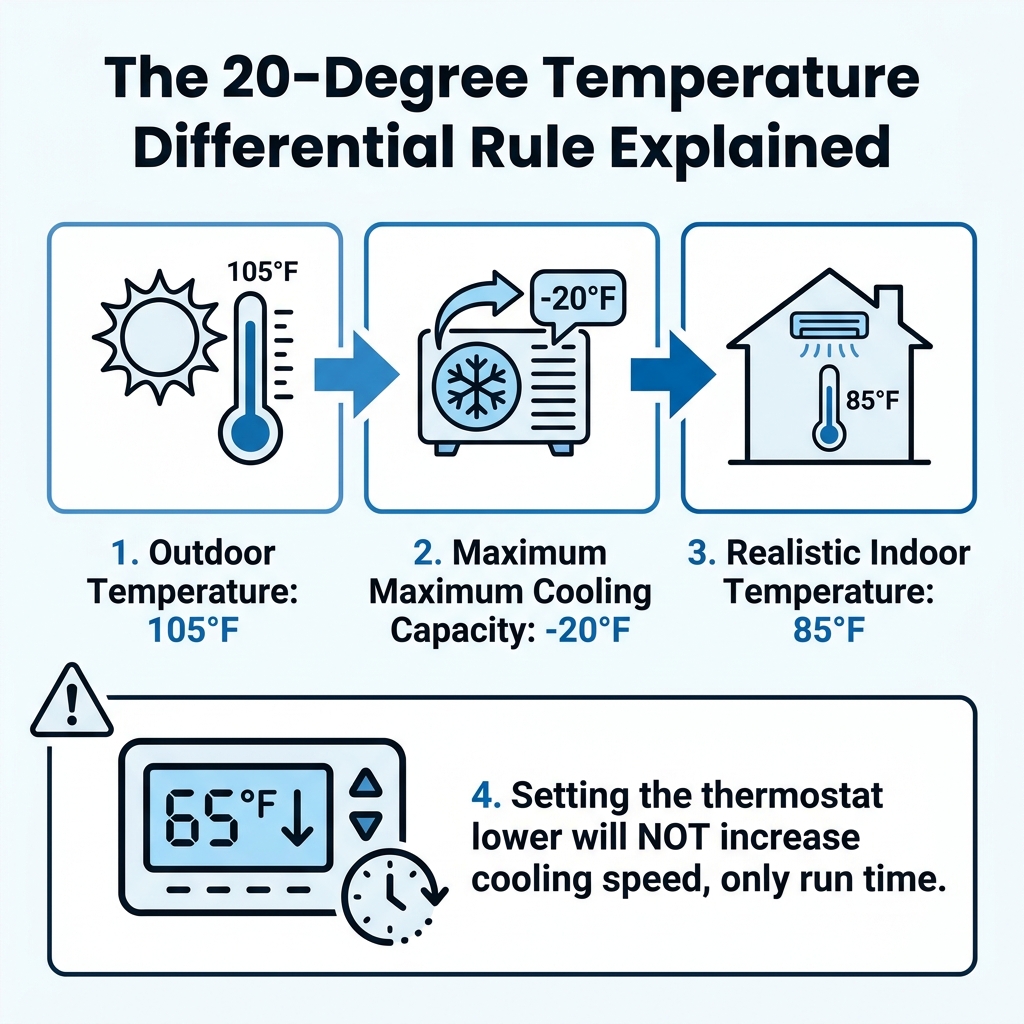
This rule states that a standard residential air conditioner is designed to cool the indoor air by a maximum of 20 degrees compared to the outdoor temperature. It is an absolute design limit based on the physics of heat transfer and the capacity of residential refrigerant coils.
The math is straightforward. If it is 105 degrees outside, an air conditioner operating at peak performance will only be able to cool the indoor air to about 85 degrees. If it is 110 degrees outside, a perfectly healthy system might only be able to maintain 90 degrees indoors. The system is removing a massive amount of heat, but the structural limits of the equipment cap how cold it can get.
Because of this, setting the thermostat to 72 degrees during a 105-degree afternoon will not make the AC blow colder air. It will not cool the house down any faster. It simply forces the system to run continuously as it tries to reach a mathematical impossibility. The unit will stay on 100% of the time, striving for 72 degrees but physically maxing out at 85 degrees.
At All American Air, our deep local expertise means we see exactly how standard AC design limits are tested during Southern Arizona heatwaves. We inspect countless systems every summer that homeowners believe are broken, only to find they are working flawlessly at their maximum capacity. This limitation applies to almost all standard residential systems, not just yours. Understanding this rule shifts your perspective from worrying about a broken air conditioner to managing a maxed-out one.

Is Continuous Operation Bad for Your Air Conditioner?
Once homeowners realize their system is supposed to run constantly in extreme heat, the next question is usually about wear and tear. Will running non-stop destroy the system? Most people assume that an air conditioner needs to rest, much like a car engine, to avoid burning out.
The reality is quite different. Air conditioners are actually designed for long, steady run cycles. In fact, continuous operation is often far more energy-efficient and mechanically gentle than "short cycling." Short cycling occurs when a unit turns on, runs for five minutes, shuts off, and turns right back on again. The most stressful moment for a compressor is the startup phase. It requires a massive surge of electricity to overcome inertia and start pumping refrigerant. Once the compressor is up and running, maintaining that momentum requires significantly less energy and puts less strain on the electrical components.
Long run cycles also provide a major comfort benefit: humidity removal. Even in a dry climate, indoor activities like cooking, showering, and breathing introduce moisture into the air. The longer the air conditioner runs, the more air passes over the cold evaporator coils, stripping moisture out of the home. This dehumidification effect makes an 80-degree room feel much more comfortable than a humid 75-degree room.
However, there is a caveat. While continuous operation is mechanically normal under extreme load, it does accumulate operational hours rapidly. During a July peak summer heatwave, your system might run for 12 to 14 hours a day. This intense usage puts extra wear and tear on moving parts like fan motors and capacitors, making seasonal upkeep absolutely critical.
For a system to survive these long run times without overheating, it needs unrestricted airflow. Clean evaporator coils, debris-free outdoor condenser coils, and fresh indoor air filters are essential. When airflow is blocked by dirt, the compressor runs hotter than it should, which can lead to premature failure. Keeping up with regular AC maintenance ensures your system is prepared to handle the marathon runs required during the hottest months of the year.
When to Worry: Normal Capacity vs. Compressor Failure
While we have established that a system running non-stop is often normal, you still need to know how to spot a genuine problem. It is vital to contrast normal operation with abnormal operation so you do not ignore a system that is actually failing.
Normal operation means the system is running constantly but is successfully maintaining that 20-degree temperature differential. The air coming out of your vents should feel crisp and cold. Abnormal operation means the system is running constantly, but the air coming out of the vents feels like room temperature, or even warm. If the indoor temperature is climbing rapidly and the system cannot even maintain a 15- or 20-degree difference from the outside, you have a mechanical issue.
Here is a breakdown of what to look for when evaluating your system's performance:
• Airflow Temperature — Normal Maximum Capacity: Consistently cold, maintaining a 20-degree drop from outdoor temps. — Potential Compressor Failure: Blowing warm, lukewarm, or room-temperature air.
• System Sounds — Normal Maximum Capacity: A steady, continuous hum from the outdoor unit. — Potential Compressor Failure: Loud grinding, buzzing, clicking, or metal-on-metal screeching.
• Electrical Behavior — Normal Maximum Capacity: System runs smoothly on its dedicated circuit. — Potential Compressor Failure: Frequently tripped circuit breakers or flickering house lights.
• Coil Condition — Normal Maximum Capacity: Normal condensation dripping from the outdoor drain line. — Potential Compressor Failure: Visible ice forming on the copper refrigerant lines or indoor coils.
Issues like low refrigerant levels, a failing capacitor, or a dying compressor will prevent the system from reaching even the standard 20-degree differential. When a compressor struggles to pump refrigerant, it pulls excessive electrical current, which often leads to tripped breakers or loud, struggling noises.
It is important to emphasize that diagnosing compressor issues or refrigerant leaks requires specialized tools and a licensed professional. Never attempt DIY electrical or refrigerant repairs, as these systems operate under high pressure and high voltage. If your system shows the warning signs of failure, it may be time to consult an expert about AC replacement before the unit completely breaks down.
How Extreme Temperatures Impact Different Equipment
Not all air conditioning systems handle extreme heat the exact same way. While the fundamental physics of the 20-degree rule apply across the board, the specific technology inside your unit influences how efficiently it maintains that differential. If you are searching for answers about an AC running constantly over 100 degrees, the type of equipment you own plays a major role.
Single-Stage vs. Variable-Speed Systems: Most older or entry-level homes have single-stage air conditioners. These units have only one speed: 100% capacity. When it is 105 degrees outside, a single-stage unit will blast at full power continuously. Newer, variable-speed systems are different. They can adjust their cooling output anywhere from 30% to 100% capacity based on the immediate need. During a heatwave, a variable-speed unit will still run constantly, but it might cruise efficiently at 80% capacity rather than straining at 100%, saving energy while keeping temperatures stable.
Heat Pumps in Cooling Mode: Heat pumps are incredibly popular because they handle both heating and cooling. When operating in cooling mode during the summer, a heat pump functions exactly like a traditional air conditioner. It relies on the same refrigerant cycle and faces the exact same thermal limitations. A heat pump will also max out around a 20-degree differential when outdoor temperatures cross the 100-degree mark.
The Danger of Improper Sizing: Extreme heat exposes improperly sized equipment. If an HVAC system is too small (undersized) for the square footage of the home, it will never reach the 20-degree differential. It will run constantly but only manage a 10- or 12-degree drop, leaving the home miserably hot. Conversely, a system that is too large (oversized) will cool the house too fast and shut off abruptly, failing to remove humidity. Understanding the different types of HVAC systems can help you make informed decisions when it is time to upgrade your home's cooling infrastructure.
Smart Thermostat Strategies for 100-Degree Days
When the outdoor temperature spikes, you need actionable, safe steps to improve your indoor comfort without overloading your equipment. Forcing your system to work harder than physics allows will only lead to premature breakdowns. Instead, you can manage the heat load on your home.
Here are effective strategies specifically useful for the dry desert heat of Southern Arizona:
• Set a realistic target: Advise setting the thermostat to a realistic number, such as 78 to 80 degrees, rather than 70 degrees when it is 105 outside. A setting of 78 degrees is achievable for the system and prevents the compressor from running at absolute maximum stress all day long.
• Utilize the wind-chill effect: Recommend using ceiling fans in occupied rooms. Fans do not lower the room's temperature, but they evaporate moisture from your skin, creating a wind-chill effect that makes an 80-degree room feel significantly cooler. Remember to turn fans off when you leave the room.
• Block solar heat gain: Suggest closing blinds, shades, and blackout curtains during the hottest parts of the day. In a desert climate, radiant heat from direct sunlight pouring through windows is one of the biggest contributors to indoor temperature spikes. Blocking that light reduces the heat load your AC has to fight.
• Protect your airflow: Remind yourself to check and replace your indoor air filter. During a July peak summer heatwave, your system is moving massive volumes of air. A clogged, dirty filter restricts airflow, forcing the blower motor to work much harder than necessary and severely dropping the system's cooling efficiency.
• Pre-cool your home: In the early morning when outdoor temperatures are lower, drop your thermostat a few degrees to "store" cooling in your home's walls and furniture. As the afternoon heat builds, raise the thermostat back up. This gives your system a head start before the worst of the heat hits.
Frequently Asked Questions About AC Performance in Extreme Heat
At what temperature does an AC struggle to cool?
Most standard units begin to reach their maximum design capacity when outdoor temperatures exceed 95 to 100 degrees. Because of the 20-degree temperature differential rule, any outdoor temperature above 100 degrees means the system will struggle to cool the home below 80 degrees. At this point, the unit is not necessarily failing; it is simply fighting a massive thermal load that matches its maximum output.
Should I turn off my AC if it's running constantly?
No, do not turn it off unless it is blowing warm air, making strange loud noises, or freezing up with visible ice. Turning the system off during a heatwave will allow the indoor temperature to spike rapidly. Once the house heats up, the walls and furniture absorb that heat, making it exponentially harder and more energy-intensive for the system to cool the house down later in the evening.
How long should an AC run in 100 degree weather?
It is completely normal for the unit to run continuously—meaning 100% of the time without cycling off—during peak afternoon heat. To maintain the 20-degree indoor/outdoor differential, the system must constantly remove the heat that is relentlessly pressing into the home. As long as the air coming from the vents is cold, continuous operation is the expected behavior.
Is it bad for an AC to run non stop?
While it adds operational hours to the equipment, continuous running is actually less stressful on the compressor than turning on and off constantly. The startup phase draws the most electrical current and causes the most mechanical wear. Provided the unit is well-maintained with clean coils and fresh filters, long run cycles are safe and help dehumidify the home effectively.
How do I know if my AC compressor is failing?
Signs of a failing compressor include the system blowing warm air, loud grinding or screeching noises at the outdoor unit, hard starting, or frequently tripped circuit breakers. If the system is running constantly but the indoor temperature continues to rise well beyond the 20-degree differential, the compressor is likely struggling to pump refrigerant and requires professional diagnostics.
Can a dirty filter cause my AC to run continuously?
Yes, a clogged filter severely restricts airflow, forcing the system to run longer to circulate enough conditioned air through the home. When airflow drops, the system cannot remove heat effectively, leading to extended run times and potentially causing the evaporator coil to freeze over. Checking and changing your filter regularly is the most important step in preventing unnecessary continuous operation.
Get Expert Help for Your AC System in Extreme Heat
Navigating summer in the desert requires understanding what your cooling system can and cannot do. While it is completely normal for an AC running constantly over 100 degrees to never shut off, you should never ignore a system that is blowing warm air or making terrible noises. A unit that is simply maxed out is doing its job; a unit that cannot maintain a 20-degree drop needs immediate attention.
Local experts understand these extreme conditions better than anyone. We know exactly how the intense heat impacts motors, capacitors, and compressors. If your system is struggling to keep up, or if you suspect it has crossed the line from working hard to actively failing, do not wait for a complete breakdown. Promptly schedule an inspection for AC repair in Benson to ensure your home stays safe and comfortable through the worst of the summer heat.
Other Blogs

•WHY US
Why Homeowners Choose Us for custom HVAC work
Ann N.
While it was expensive to replace my HVAC I loved with with and They delivered when promised and were very diligent about making sure I understood how the system operated. The knowledge level was SO MUCH HIGHER than anyone else I had received a quote from. I would highly recommend them for HVAC replacement.
Ed T.
americanairaz was very professional and did a thorough job on the installation as well as the annual maintenance check. I would highly recommend All American Air to anyone.
Renaye F.
Great service, professional and affordable company. Very knowledgeable and also took the time to explain everything in detail. Which I appreciated very much. Would definitely recommend.
John C.
First class shop. Very clean install ,would recommend to a friend. Excellent equipment,Mitsubishi is number one in industry.and most efficient seer rating.thank you

Read More Blogs
Explore the world of creative writing and discover how words can paint vivid pictures in the minds of readers.