



Waking Up to a "Smoking" Heat Pump on a Freezing Morning
Are you looking out your window and frantically wondering, is it normal for my heat pump to defrost during a cold Arizona morning? At All American Air, our team fields these panicked calls every late fall. It is a jarring experience to wake up to brisk 30-degree outdoor temperatures, glance into your yard, and see what looks like thick white smoke billowing from your outdoor unit. Your immediate instinct might be to panic, rush to the thermostat, and shut the entire system down to prevent a fire. However, that "smoke" is almost certainly harmless water vapor, and interrupting this process can actually cause more harm than good.
Understanding how your equipment handles abrupt temperature drops is a core part of managing modern HVAC systems. What you are witnessing is the defrost cycle—a built-in, automated protection mechanism designed to keep your unit running efficiently. When you shut the system off in a panic, you interrupt this vital self-maintenance cycle, leaving ice trapped on the delicate components. Instead of reaching for the power switch, take a breath. The steam you see is a sign that your system is actively protecting itself from the harsh morning chill.
What Actually Happens During a Heat Pump Defrost Cycle?
To understand why your outdoor unit suddenly turns into a steam machine on crisp November late-fall mornings, you have to look at the basic thermodynamics of how these systems extract heat. In our years of repairing local HVAC equipment, we've found that explaining this process helps homeowners realize their system is actually working perfectly. Even when it feels freezing outside, there is still ambient heat energy in the air. Your system uses chemical refrigerant to absorb that heat and move it indoors.
The Problem: To successfully absorb heat from cold outdoor air, the refrigerant coils inside the outdoor unit must drop 10 to 20 degrees below the ambient outdoor temperature. If it is 38 degrees outside, your coils might be sitting at a frigid 18 degrees. At this temperature, any ambient moisture in the desert air instantly freezes upon contact with the metal coils, slowly building up a layer of white frost.
The Cause of the Steam: If that frost is allowed to grow into a solid block of ice, it acts as an insulator. The system can no longer pull heat from the air, and the compressor will overwork itself until it fails. To prevent this, the internal sensors detect the ice buildup and trigger the defrost cycle.
The Mechanical Solution: The system temporarily reverses its operation. It stops sending heat indoors and instead takes the warm refrigerant from inside your house and pumps it directly into the outdoor coils. This rapid influx of heat melts the accumulated ice in minutes. As the freezing ice meets the hot refrigerant coils, it instantly vaporizes, creating the thick white steam you see rising from the top of the unit. Because different types of HVAC systems handle frost differently, heat pumps are uniquely designed with this rapid-reversal capability to protect the compressor from permanent damage.
• Reversing Valve — Standard Heating Mode: Positioned to bring heat indoors — Active Defrost Mode: Positioned to send heat outdoors
• Outdoor Fan — Standard Heating Mode: Spinning rapidly to pull air — Active Defrost Mode: Completely stopped
• Coil Temperature — Standard Heating Mode: 10-20 degrees below ambient — Active Defrost Mode: Rapidly heating to melt ice
• Visual Output — Standard Heating Mode: None (invisible heat transfer) — Active Defrost Mode: Thick white water vapor (steam)
Steam vs. Smoke: Sensory Signs of Normal Operation
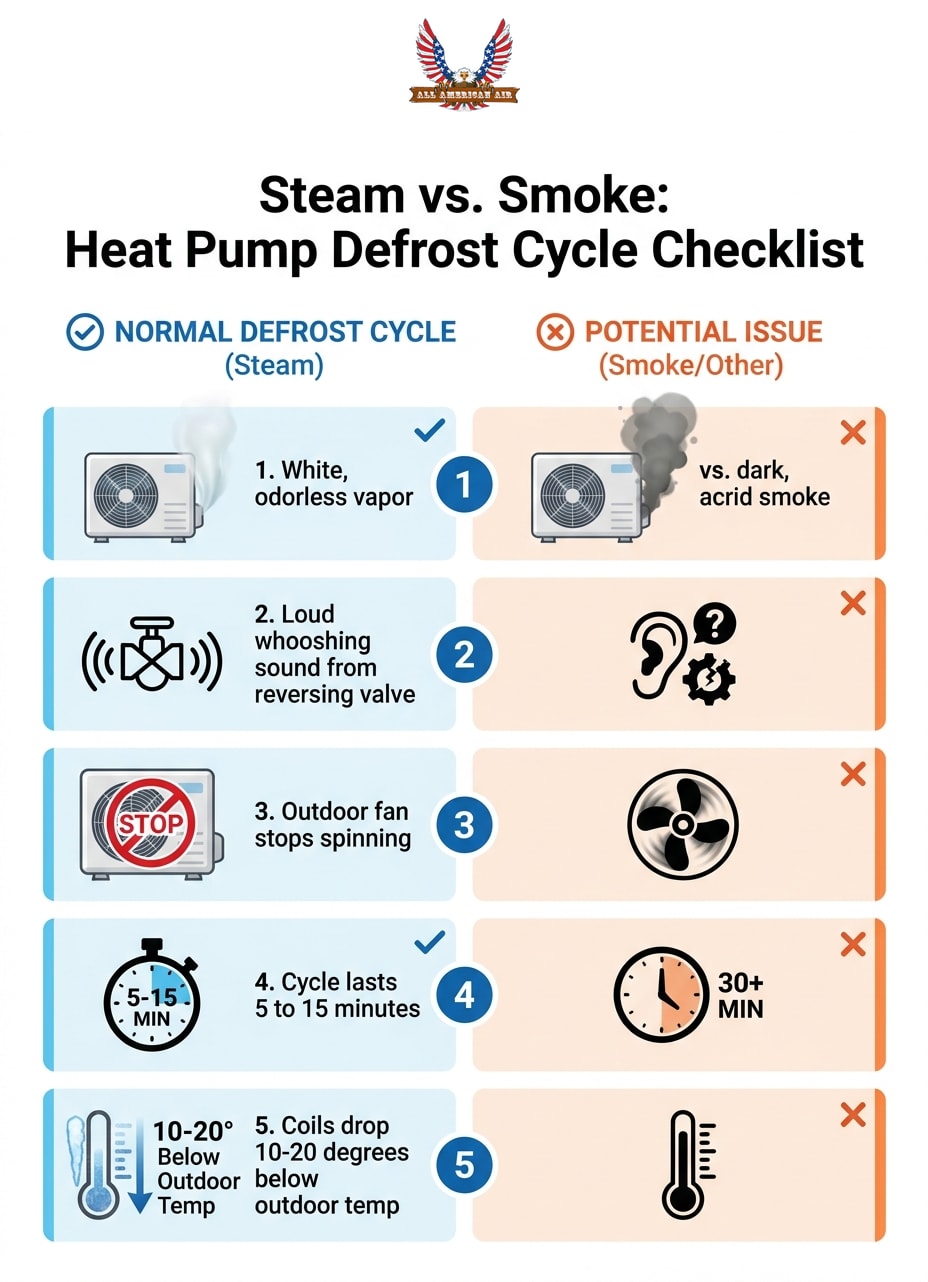
When you are staring at a cloud rising from your expensive heating equipment during 30-degree outdoor temperatures, it is easy to assume the worst. However, a normal defrost cycle produces very specific sensory clues. Our technicians recommend using this simple checklist to confidently distinguish between a routine ice-melting cycle and a dangerous electrical malfunction.
• Visual check: Steam from a defrost cycle is bright white, rapidly dissipates into the air, and looks like the vapor from a boiling kettle. Actual smoke from an electrical fire will be dark gray or black, linger heavily in the air, and billow continuously.
• Auditory check: You will hear a sudden, loud sound when the cycle begins, followed by an unusual quiet. This is the mechanical shift of the system redirecting pressure.
• Operational check: The large fan blades on the top of the outdoor unit will intentionally stop spinning, even though the compressor inside is still humming loudly.
• Olfactory check: This is the most definitive test. Water vapor steam is completely odorless. If a motor is burning out or wires are melting, you will immediately notice a distinct, acrid, harsh burning smell that irritates your nose and throat.
The "Whooshing" Sound Explained
Many homeowners report a startling, loud "whoosh" or hissing noise right before the steam appears. This sound is simply the reversing valve shifting gears under high pressure. The system is instantly redirecting the flow of pressurized refrigerant from heating your home to heating the outdoor coils. That sudden pressure equalization creates a loud rush of gas, which is completely normal and indicates the valve is functioning perfectly.
Why the Outdoor Fan Stops
It can be unsettling to see the outdoor unit humming while the top fan remains completely still. The system stops this fan on purpose. If the fan continued to blow freezing outdoor air over the coils, it would cool them down and fight the melting process. By shutting the fan off, the unit allows the heat to build up rapidly within the metal housing, speeding up the ice melt so it can return to heating your home as quickly as possible.
Why Southern Arizona's Desert Climate Triggers Sudden Frost
There is a common misconception that heat pumps only freeze over in humid, snowy, or far-northern climates. Our technicians often meet Benson AZ homeowners who are surprised to find their units covered in frost, assuming the dry desert air prevents ice formation. The reality we see every winter is that the unique climate of Southern Arizona actually creates the perfect storm for rapid frost buildup.
The desert is famous for its drastic diurnal temperature variation. Because there is very little humidity or cloud cover to trap heat, the temperature plummets the moment the sun goes down. You might experience a pleasant 72-degree afternoon where your system actually runs in cooling mode to keep the house comfortable. However, just hours later, the temperature can violently drop below freezing before dawn.
When the system kicks on to combat the sudden morning chill, the metal coils drop below the dew point. Even in dry desert air, there is a small amount of ambient moisture. When the coils drop to 15 or 20 degrees, that trace moisture is rapidly pulled out of the air and flash-freezes onto the metal fins. Modern systems are specifically engineered to handle these rapid environmental shifts, meaning the sudden appearance of frost—and the subsequent steam from the defrost cycle—is exactly how the equipment was designed to operate in a desert winter.
How Long Should the Defrost Mode Last?
While seeing steam is normal, the duration of the cycle is the key indicator of your system's health. Setting clear expectations on timing ensures you know exactly when normal operation ends and a potential mechanical problem begins. In our experience servicing heat pumps across Benson on crisp November late-fall mornings, you can expect the cycle to follow a very predictable timeline.
1. Detection Phase (Minute 0): The internal coil sensors detect that ice is impeding airflow. The reversing valve shifts with a loud whoosh, and the outdoor fan stops spinning.
2. Melting Phase (Minutes 1 to 10): Hot refrigerant floods the outdoor coils. You will see thick white steam rising from the unit as the ice turns to vapor. You may feel slightly cooler air coming from your indoor vents during this phase, though most modern systems activate backup heat strips to compensate.
3. Resolution Phase (Minutes 5 to 15): The sensors detect that the coil temperature has risen enough to confirm all ice is melted. A normal cycle rarely exceeds 15 minutes, though heavy ice might push it slightly longer.
4. Resumption Phase: The reversing valve shifts back, the outdoor fan kicks on, and the system returns to pumping warm air into your home.
If your system stays in defrost mode for more than 30 minutes, or if it constantly cycles in and out of defrost every half hour, it indicates a failing sensor or a malfunctioning control board. Keeping up with a preventative maintenance plan ensures these sensors are cleaned and calibrated before the winter cold arrives, preventing endless cycling.
When to Stop the System and Call a Professional
While steam is harmless, there are specific scenarios where your system is genuinely struggling and requires expert intervention. Knowing the difference between routine maintenance and a mechanical failure protects your home and your wallet.
The Problem: You walk outside in Benson AZ and notice that the unit is not just lightly frosted, but completely encased in a solid, thick block of ice that resembles a glacier. The defrost cycle runs, but the ice never fully melts, and the system struggles to heat your home.
The Cause: A system that freezes solid and cannot defrost itself usually suffers from low refrigerant levels, a failing defrost control board, a stuck reversing valve, or a broken outdoor fan motor. When refrigerant is low, the pressure drops, causing the coils to become unnaturally cold and accumulate ice faster than the system can melt it.
The Solution: Turn the system off at the thermostat to prevent compressor failure, and call a licensed technician. Never attempt DIY fixes for a frozen unit. Do not use screwdrivers or hammers to chip away the ice; the aluminum fins are extremely delicate, and one slip can puncture a refrigerant line. Likewise, never pour hot water over the frozen unit. The rapid thermal expansion can easily crack the copper tubing and destroy the system.
As local experts, the team at All American Air understands the specific demands the desert climate places on heat pumps. We've seen firsthand what happens when homeowners ignore a system that is freezing solid. A trained technician from our crew can quickly identify whether a system is just executing a normal defrost cycle or requires actual mechanical repair.
Frequently Asked Questions About Winter Heat Pump Operation
Is it normal for a heat pump to steam in cold weather?
Yes, it is completely normal and expected. The steam is just harmless water vapor rising into the air as the system melts accumulated frost off the outdoor coils. When 30-degree outdoor temperatures cause ice to form, the unit automatically heats itself up to clear the blockage, resulting in the visible steam you see on cold mornings.
What does a heat pump defrost cycle sound like?
It typically sounds like a loud whoosh or hiss as the internal reversing valve shifts pressure gears. Following that initial burst of sound, you will notice a quieter hum because the large outdoor fan intentionally stops spinning. The compressor inside will continue to run, but the overall outdoor noise level will drop until the cycle completes.
How do I know if my heat pump is on fire or just defrosting?
Steam from defrosting is bright white, completely odorless, and dissipates quickly into the surrounding air. Smoke from an electrical short or motor fire will be darker, linger heavily in the yard, and have a harsh, acrid burning smell. If you smell melting plastic or burning metal, shut the power off immediately; otherwise, the white vapor is just water.
Why is my heat pump blowing cold air in defrost mode?
During defrost, the system temporarily acts like an air conditioner to send warm refrigerant outside and melt the ice. Most modern systems automatically activate backup electric heat strips indoors to counteract this chilling effect. However, you may briefly feel slightly cooler air coming from your vents for the 5 to 15 minutes the cycle runs.
Can I pour hot water on my frozen heat pump?
No, you should never pour hot water over frozen HVAC equipment. Pouring boiling or hot water onto freezing cold metal components causes rapid thermal expansion, which can easily crack refrigerant lines or damage the delicate aluminum fins. Always let the automated cycle run its course, or call a professional if the ice refuses to melt.
Keep Your System Running Strong Through the Desert Winter
Waking up on crisp November late-fall mornings to the sight of steam rising from your yard can be alarming, but it is usually a sign that your equipment is working perfectly. The defrost cycle is a brilliant piece of engineering designed to protect your investment from the harsh realities of desert temperature drops. By understanding the sensory clues—the white vapor, the whooshing sound, and the stopped fan—you can enjoy your morning coffee with total peace of mind.
However, if your system is struggling to keep the house warm, staying in defrost mode for more than half an hour, or freezing into a solid block of ice, it is time to bring in the professionals. Do not let a minor sensor issue turn into a major compressor failure. Reach out to All American Air for professional heat pump services to ensure your home stays reliably warm and comfortable all winter long.
Other Blogs

•WHY US
Why Homeowners Choose Us for custom HVAC work
Ann N.
While it was expensive to replace my HVAC I loved with with and They delivered when promised and were very diligent about making sure I understood how the system operated. The knowledge level was SO MUCH HIGHER than anyone else I had received a quote from. I would highly recommend them for HVAC replacement.
Ed T.
americanairaz was very professional and did a thorough job on the installation as well as the annual maintenance check. I would highly recommend All American Air to anyone.
Renaye F.
Great service, professional and affordable company. Very knowledgeable and also took the time to explain everything in detail. Which I appreciated very much. Would definitely recommend.
John C.
First class shop. Very clean install ,would recommend to a friend. Excellent equipment,Mitsubishi is number one in industry.and most efficient seer rating.thank you

Read More Blogs
Explore the world of creative writing and discover how words can paint vivid pictures in the minds of readers.

