


Holiday Cooking Meets High-Desert Cold
In our years serving Cochise County, we've learned that late November brings a distinct weather pattern, which means preparing your mini-split for Benson's Thanksgiving temperature swings is the key to keeping your home comfortable when the oven is running all day. The seasonal reality of hosting during the holidays means your kitchen appliances are working overtime, generating massive amounts of artificial heat. At the same time, the high desert environment outside is preparing for a drastic plunge in temperature the moment the sun sets over the horizon.
This clash between artificial indoor heat loads and extreme outdoor temperature drops puts unique stress on your home's HVAC system. The decision point for most homeowners rests on choosing the correct manual thermostat settings to ensure seamless comfort without overworking the compressor. Relying on automated modes during this specific time of year often leads to inefficient operation and uncomfortable guests. By understanding how to manage advanced user-facing controls, you can maintain a perfect indoor climate from the warm afternoon right through the freezing night.
For more details on how these systems operate, you can explore our comprehensive guide to Mini-Split Systems.
Understanding the Thanksgiving Heat Load in Your Home
The term "heat load" refers to the amount of heat energy that must be removed from a space to maintain a desired temperature. During late November and Thanksgiving, the heat load inside a typical home changes dramatically. A turkey roasting for several hours, multiple burners boiling water for side dishes, and the constant opening and closing of the oven door add thousands of artificial BTUs (British Thermal Units) to your home's interior.
Beyond the appliances, the simple act of hosting extended family and guests alters the climate of your home. Every adult human generates roughly 300 to 400 BTUs of heat per hour just by being present. If you have ten guests mingling in the living room and kitchen, that is the equivalent of running a small space heater on full blast. This artificial heat load typically peaks in the mid-to-late afternoon, precisely when the outdoor temperature in the high desert is also at its warmest.
At All American Air, we constantly remind our customers that to keep your system running smoothly through these high-demand periods, proactive HVAC maintenance in Benson is highly recommended before the holiday season begins.
• Oven & Stovetop — Estimated Impact on Indoor Climate: Adds concentrated, intense heat to the kitchen area, often raising local temps by 5-10 degrees. — Thermostat Management Strategy: Utilize fan-only modes to disperse heat rather than triggering active cooling.
• House Guests — Estimated Impact on Indoor Climate: Generates steady, ambient body heat and increases indoor humidity levels. — Thermostat Management Strategy: Adjust directional vanes to maintain airflow above head level to prevent stuffiness.
• Afternoon Sun — Estimated Impact on Indoor Climate: Solar heat gain through south-facing windows compounds the appliance heat. — Thermostat Management Strategy: Close blinds during peak sun hours to reduce the burden on the mini-split.
How Indoor Heat Tricks Your Thermostat
Our technicians frequently see thermostats located near kitchens or busy living spaces registering false highs during holiday gatherings. The sensor reads the localized heat from the stove and the crowded room, tricking the system into thinking the entire house is sweltering. Meanwhile, guest bedrooms or hallways far from the kitchen might be significantly colder. Remote sensors or specific zone adjustments on your ductless system are necessary when the kitchen is running hot, ensuring that the main living areas do not trigger a cooling cycle that freezes out the rest of the house.
The Challenge of Rapid Diurnal Temperature Drops
The microclimate of Cochise County presents a unique challenge known as diurnal temperature variation. In the high desert, the lack of humidity and clear skies allow the sun to warm the earth rapidly during the day, but that same lack of moisture means the heat escapes straight back into the atmosphere the moment the sun goes down. In Benson AZ, it is completely normal to experience a beautiful, warm afternoon followed by a sudden, drastic temperature drop of 30 degrees or more within just a few hours.
Late autumn afternoons can feel surprisingly warm inside, especially with the sun hitting south-facing windows and the Thanksgiving cooking in full swing. However, this afternoon warmth is fleeting. As evening approaches, the rapid shift demands a significant operational change from your HVAC equipment. A system that was just trying to manage excess indoor heat suddenly needs to produce steady, reliable warmth to combat the plunging outdoor temperatures.
With our extensive experience installing and servicing heat pumps across the region, our team brings deep local expertise to understanding how high-desert microclimates impact ductless system performance. Navigating the specific weather patterns of the Benson, AZ service area requires more than just generic thermostat advice; it requires strategies tailored to extreme day-to-night transitions.
Why 'Auto' Mode Fails During Late Autumn Temperature Swings
The problem: A pattern we see often is homeowners relying on the "Auto" mode on their ductless systems, assuming the logic board will perfectly balance the indoor climate. Auto mode is designed to switch automatically between heating and cooling to maintain a strict temperature setpoint. However, during days with extreme temperature fluctuations and high indoor artificial heat, this setting becomes a liability.
The cause: When you have a hot kitchen on a late November afternoon, the thermostat registers a temperature well above your setpoint. In Auto mode, the system immediately switches to active cooling, blowing cold air into the living space. Just a few hours later, as the sun sets and near-freezing nighttime temperatures settle over the desert, the indoor temperature plummets. The system must then abruptly reverse its reversing valve, halt the cooling process, and ramp up into high-stage heating.
The solution: Avoid the "set it and forget it" approach during major temperature fluctuation days. Manually selecting your operating modes prevents the system from fighting itself. By taking control of the mode selection, you stop the equipment from wasting energy trying to cool down a kitchen that will naturally cool off as soon as the cooking is done and the sun goes down.
The Risk of Short-Cycling
Short-cycling occurs when an HVAC system turns on and off rapidly without ever completing a full heating or cooling cycle. When a mini-split is left in Auto mode during a chaotic heat-load event like Thanksgiving, it often short-cycles because the sensor is confused by the rapid bursts of heat from the oven door opening and closing. This constant starting and stopping diminishes energy efficiency, fails to properly dehumidify the air, and puts severe mechanical wear on the compressor, ultimately reducing the lifespan of the equipment.
A Timeline for Adjusting Your Mini-Split on Thanksgiving Day
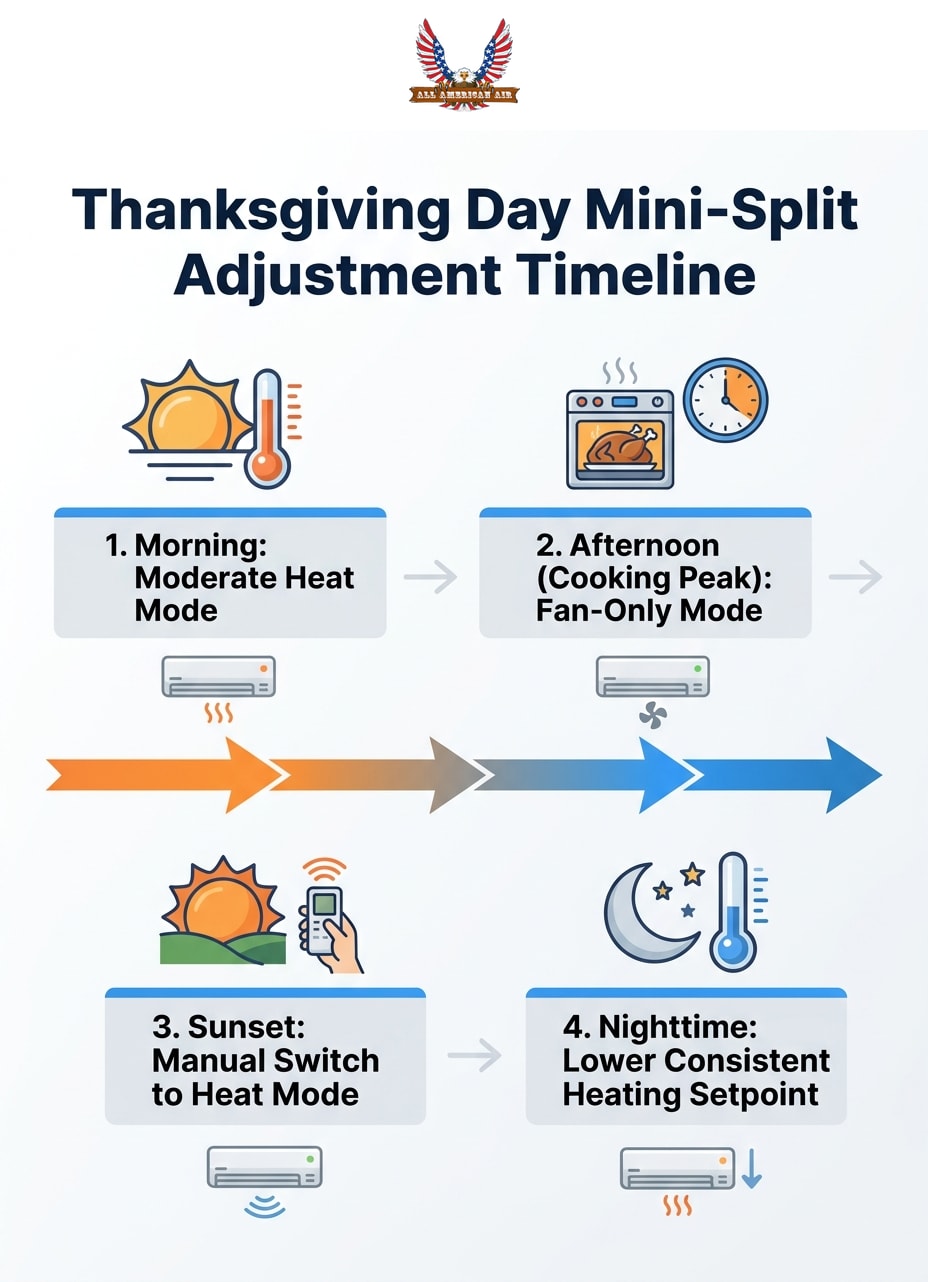
Managing your indoor climate during a high-desert holiday requires a proactive approach. Rather than reacting to temperature extremes as they happen, following a manual adjustment timeline ensures your equipment operates efficiently while keeping your guests comfortable before the near-freezing nighttime temperatures arrive.
If you are exploring upgrades to handle these swings more efficiently, professional heat pump services can ensure your system is properly sized and configured for the desert climate.
• Morning prep (8:00 AM - 11:00 AM): Set the system to a moderate "Heat" mode before the cooking begins. The house will likely still be chilly from the night before, so establish a comfortable baseline of around 68°F to 70°F.
• Afternoon cooking (12:00 PM - 4:00 PM): As the oven runs and guests arrive, manually switch the system to "Fan Only" mode. This circulates the artificial heat generated by the kitchen throughout the house without triggering the AC compressor. It keeps the air from feeling stagnant while saving energy.
• Evening transition (5:00 PM - 7:00 PM): As the sun sets and outdoor temperatures begin their rapid drop, manually switch the system back to "Heat" mode. Do this before the house gets cold, allowing the inverter compressor to ramp up slowly and efficiently.
• Nighttime settings (8:00 PM onward): Establish a consistent, slightly lower heating setpoint (around 65°F to 68°F) to maintain efficiency through the cold night. Avoid cranking the thermostat up to 80°F to combat the cold; a steady, moderate setpoint is much more effective for ductless technology.
Optimizing Airflow and Vane Direction for Guest Comfort
Temperature setpoints are only half of the comfort equation; airflow management is equally critical. Modern ductless systems offer advanced user-facing controls that allow you to maximize comfort without constantly adjusting the thermostat up and down during Late November / Thanksgiving gatherings. The directional vanes on your indoor air handlers play a massive role in how the room feels.
When the kitchen is generating heavy heat, use your remote to lock the directional vanes in a horizontal position. This pushes the warmer air across the ceiling and away from the crowded cooking area, allowing it to settle into cooler adjoining spaces. Conversely, when the evening chill sets in and you switch back to heating, point the vanes downward. Heat naturally rises, so directing the warm air toward the floor ensures it mixes thoroughly with the cold air settling at ground level.
Optimizing fan speeds is also vital. While an "Auto Fan" setting is generally efficient, hosting a large group often requires a manual medium or high fan speed to improve air circulation and prevent hot spots from forming near the ceiling. If you have a multi-zone system, take advantage of it. Keep bedroom doors open to allow excess kitchen heat to migrate, or close them and turn down the individual bedroom air handlers to conserve energy. For those interested in the capabilities of advanced multi-zone setups, reviewing Mitsubishi Electric ductless product lines highlights the precise zone control available on modern equipment.
Pre-Holiday System Checks to Ensure Reliable Heating
Extreme temperature swings require a system running at absolute peak efficiency. Before the heavy usage of the holiday season begins, performing a few basic user-friendly checks can prevent unexpected breakdowns when you need your system the most. Based on our daily service calls across Benson AZ, we find that the harsh, dusty high-desert environment makes airflow restrictions the number one cause of system strain.
First, clean your reusable indoor air filters. Ductless systems rely on completely unobstructed airflow to measure room temperature accurately and distribute conditioned air. A filter clogged with autumn dust or pet dander will choke the system, forcing the blower motor to work harder and reducing the unit's heating capacity just as the freezing night sets in. Simply washing the filters with warm water and letting them dry completely can dramatically improve performance.
Second, inspect the outdoor compressor unit. Clear away any fallen leaves, overgrown brush, or autumn debris that may have accumulated around the base and the coil fins. The outdoor unit needs clear space on all sides to pull in air and extract ambient heat. If the coils are smothered by debris, the system will struggle to generate warmth during those near-freezing nights, leading to higher energy bills and poor indoor comfort.
When to Call a Professional
If you have cleaned the filters and cleared the outdoor unit, but the system is still struggling to maintain temperature, it is time to call an expert. Signs that our technicians look for include strange grinding or rattling noises, weak airflow even on the highest fan setting, or a failure to switch smoothly between heating and cooling modes. The peace of mind that comes from having a certified technician verify your system's health before hosting a house full of guests is invaluable.
Secure Your Comfort Before the Holiday Rush
Managing the transition from a hot, cooking-heavy afternoon to a freezing Late November / Thanksgiving night doesn't have to be a source of stress. By understanding how artificial heat loads affect your home and proactively adjusting your thermostat modes manually, you can ensure a seamless transition that keeps everyone comfortable. Avoiding the "Auto" mode trap protects your equipment from unnecessary strain and prevents the dreaded short-cycling that wears down compressors.
Proper settings go a long way, but they rely on a healthy, well-maintained system to execute the job. Don't wait until the first major freeze of the season to find out your equipment is struggling. Ensure your system is ready for the high-desert winter by booking a comprehensive maintenance check with our experienced team at All American Air today.
Frequently Asked Questions
Should I use auto mode on my mini split in winter?
The short answer is no, it is generally better to avoid auto mode during the winter, especially in climates with large temperature swings. Auto mode can cause the system to switch to active cooling if the afternoon sun or indoor cooking temporarily raises the room temperature. This wastes energy and puts unnecessary mechanical stress on the reversing valve and compressor.
What temperature should a mini split be set at for winter?
For optimal efficiency and comfort, most experts recommend setting a mini-split between 68°F and 70°F while you are awake and active in the home. When sleeping or away, dropping the setpoint to 65°F maintains a baseline of warmth without overworking the system. Ductless systems operate best when maintaining a steady temperature rather than making massive, rapid adjustments.
How do you use a mini split efficiently in cold weather?
To maximize efficiency in cold weather, set your system to "Heat" mode manually and choose a steady temperature setpoint. Direct the indoor air handler's vanes downward, as warm air naturally rises, ensuring better heat distribution across the living space. Additionally, keep your indoor filters completely clean so the blower motor doesn't have to work against restricted airflow.
Why is my mini split short cycling?
Short cycling usually means the system is turning on and off rapidly because it is getting false temperature readings or suffering from restricted airflow. This often happens if the indoor filters are severely clogged, or if the unit is left in Auto mode during a period of fluctuating indoor heat (like cooking). It can also indicate an oversized unit or a refrigerant issue that requires professional diagnosis.
How does oven heat affect my ductless thermostat?
Oven heat creates a localized pocket of high temperature in the kitchen, which can trick the nearby ductless sensor into registering the entire house as too warm. If the system is in cooling or auto mode, it will blast cold air to compensate, freezing out other rooms. Managing this requires using fan-only modes or adjusting zone settings to account for the artificial heat load.
What is the best fan speed for a mini-split when hosting a large group?
When hosting a large group, a manual medium or high fan speed is usually best. The increased body heat and activity require better air circulation to prevent the room from feeling stuffy or stagnant. While "Auto Fan" is great for everyday use, locking in a higher speed ensures consistent mixing of the air during high-occupancy events.
Other Blogs

•WHY US
Why Homeowners Choose Us for custom HVAC work
Ann N.
While it was expensive to replace my HVAC I loved with with and They delivered when promised and were very diligent about making sure I understood how the system operated. The knowledge level was SO MUCH HIGHER than anyone else I had received a quote from. I would highly recommend them for HVAC replacement.
Ed T.
americanairaz was very professional and did a thorough job on the installation as well as the annual maintenance check. I would highly recommend All American Air to anyone.
Renaye F.
Great service, professional and affordable company. Very knowledgeable and also took the time to explain everything in detail. Which I appreciated very much. Would definitely recommend.
John C.
First class shop. Very clean install ,would recommend to a friend. Excellent equipment,Mitsubishi is number one in industry.and most efficient seer rating.thank you

Read More Blogs
Explore the world of creative writing and discover how words can paint vivid pictures in the minds of readers.