


HVAC and Refrigeration Services
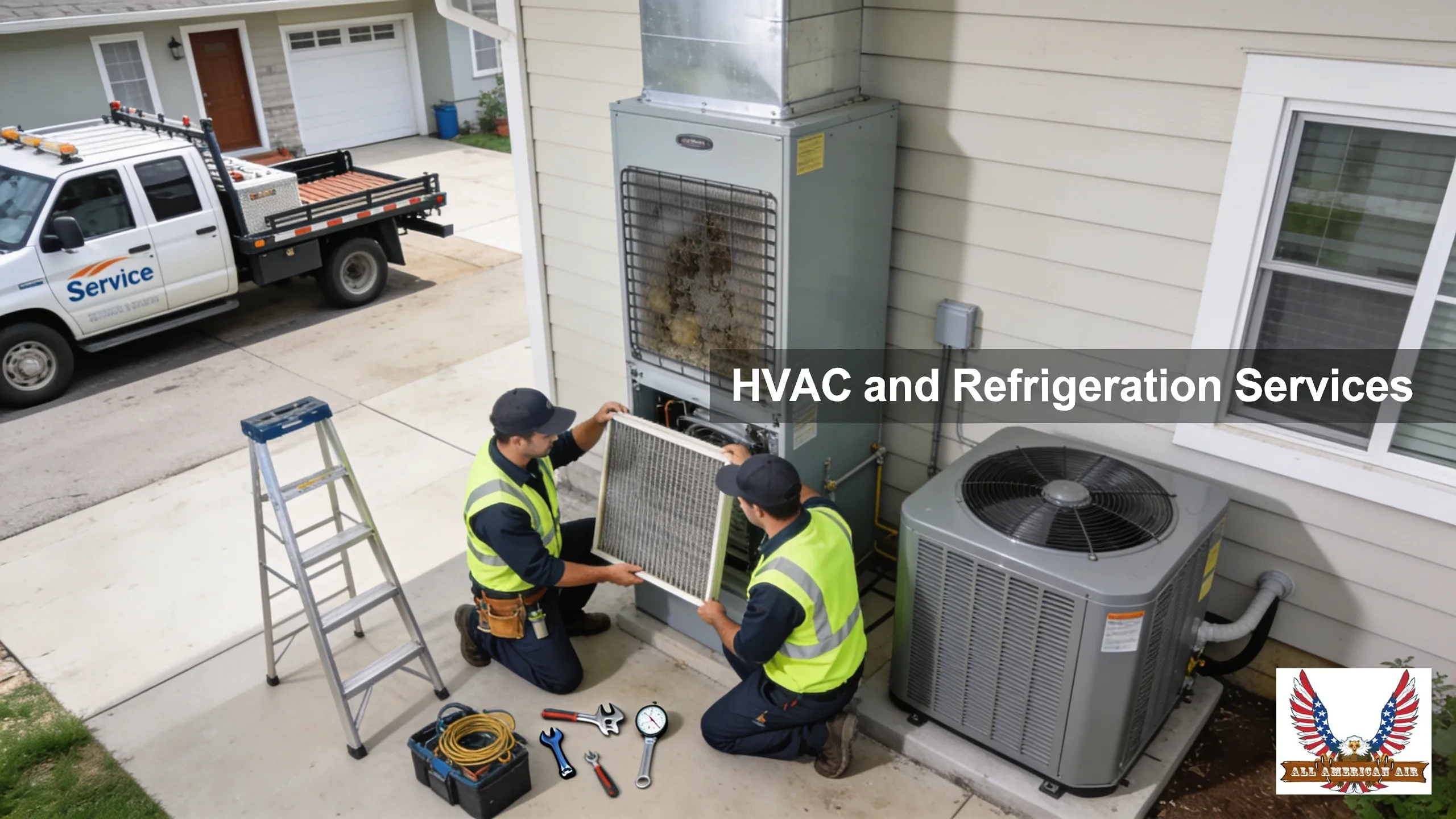
Furnace filters require replacement every 30 days for standard fiberglass types. Less frequently for pleated filters, which last longer and capture particles more efficiently. To replace one, turn off your furnace, locate the filter compartment, slide out the old filter. Insert a new one with the airflow arrow pointing toward the blower.
Furnace filter replacement timing depends on filter type. Fiberglass filters require changing every 30 days or less. Pleated filters last longer and capture particles more efficiently. We recommend inspecting filters monthly and replacing them before airflow becomes restricted. A clogged filter strains your system, raises utility bills, and degrades indoor air quality noticeably.
Key Takeaways
- Replace fiberglass filters every 30 days due to their lower efficiency and thinner material.
- Pleated air filters last longer and capture more airborne particles than fiberglass options.
- A clogged furnace filter forces your HVAC system to work harder, raising energy costs.
- Turn off your HVAC system before removing the old filter to avoid spreading dust.
Why Does Your Furnace Filter Matter So Much?
A furnace filter performs one of the most critical jobs in any HVAC system. Trapping airborne particles before they reach sensitive mechanical components. Neglecting regular filter replacement directly reduces system efficiency, drives up energy bills. Opens the door to costly repairs that could have been avoided entirely.
A clogged filter blocks airflow through the system. Restricted airflow forces the unit to work harder to move conditioned air through your home. That added strain translates into measurable increases in energy consumption and, over time, accelerated wear on components. The damage compounds quietly — until a repair bill makes the problem impossible to ignore.
What Happens When You Skip Filter Replacement?
When HVAC filters go unchanged too long, the system loses its ability to circulate air freely. Reduced airflow strains the blower motor and heat exchanger. Comfort drops. Energy costs climb. What starts as a minor maintenance oversight becomes a significant mechanical problem.
How Does a Clean Filter Protect Home Comfort?
A clean filter maintains steady, unrestricted airflow across every season. Southern Arizona demands year-round system performance. Scorching summers and cold desert winters leave no margin for a struggling HVAC unit. Consistent filter maintenance keeps indoor temperatures stable and air quality healthy throughout the year.
At All American Air, our approach to HVAC service in Southern Arizona is built on exactly this kind of foundational care:
- Diagnose accurately — identify airflow restrictions before they escalate
- Service thoroughly — address filter condition as part of every maintenance visit
- Advise honestly — recommend replacement schedules matched to each system and environment
Routine filter maintenance is the simplest, most cost-effective step any homeowner can take to protect their HVAC investment.
What Tools and Materials Do You Need First?
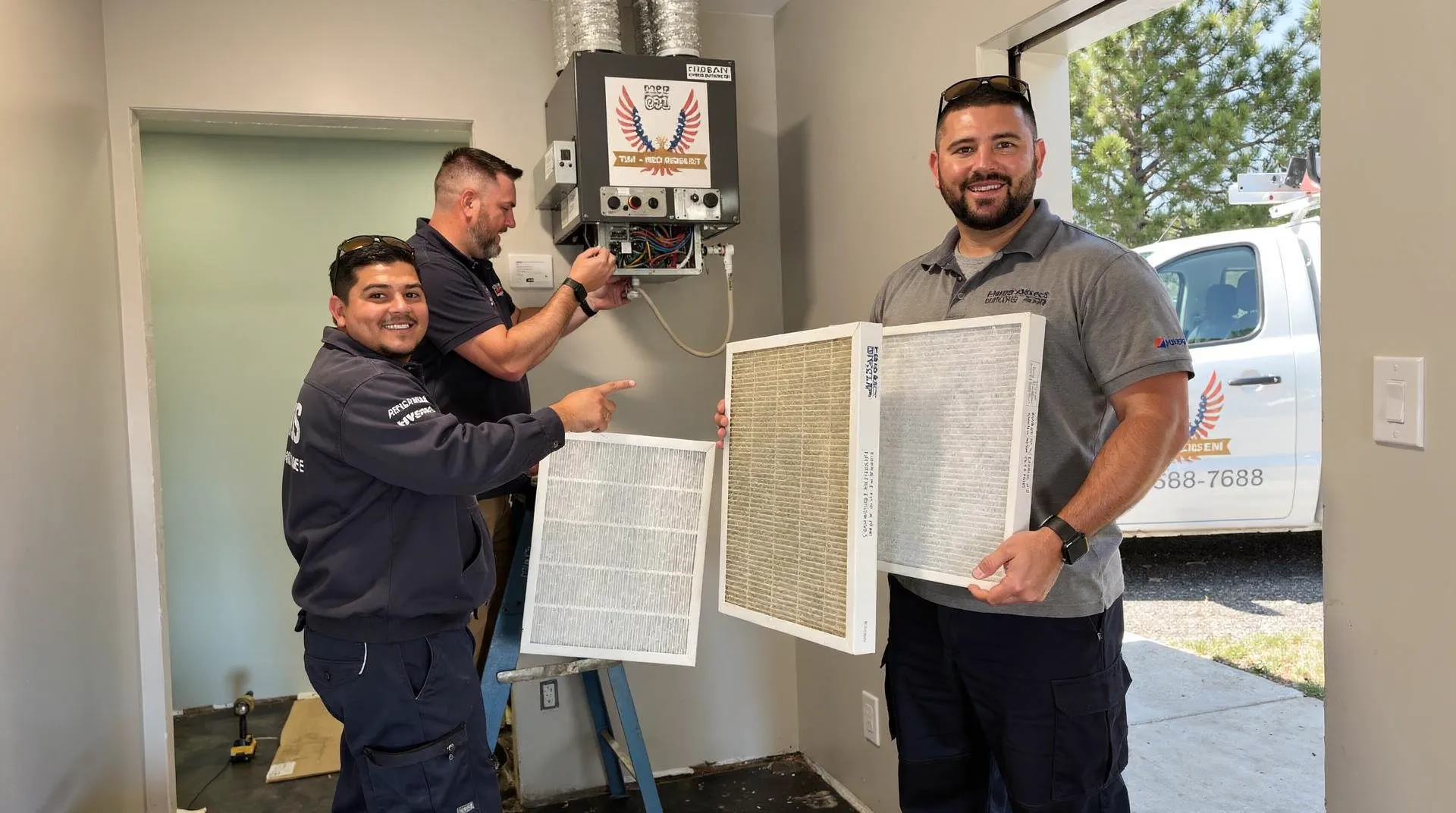
Gathering the right materials before starting a furnace filter swap prevents mid-task delays. Ensures the job gets done correctly the first time. The correct filter size, the right filter type. A few basic household items are all that stand between a clean system. A wasted trip to the hardware store.
What filter type should you choose?
HVAC filters fall into two main disposable categories: fiberglass and pleated. Fiberglass filters are the more affordable option, though they capture fewer airborne particles. Pleated filters cost more upfront but deliver superior filtration efficiency and a longer service life. Knowing the difference before you purchase saves time and protects your system's performance.
Here is a quick side-by-side comparison:
How do you find the correct filter size?
The correct size is printed directly on the frame of the existing filter. Check that number before purchasing a replacement. An ill-fitting filter leaves gaps that allow unfiltered air to bypass the media entirely, defeating the purpose of filter replacement altogether. Remove the old filter carefully and read the dimensions printed on its cardboard edge.
Checklist of materials to have ready:
- Confirm the filter size from the existing filter frame.
- Purchase the correct replacement filter — fiberglass or pleated.
- Have a flashlight available to inspect the filter housing.
- Keep a trash bag nearby for safe disposal of the old filter.
All American Air serves residential and commercial clients across Southern Arizona — from Benson to Tucson. And our team is always available to assist when a filter swap reveals a deeper system concern.
How Often Should You Replace Your Furnace Filter?
Furnace filter replacement frequency depends primarily on the filter type installed in your system. Neglecting a clogged filter forces your HVAC system to work harder, driving up energy consumption and accelerating wear on critical components.
The two most common filter types have very different service intervals:
Fiberglass filters are the more affordable option, but lower efficiency means they load up with debris faster. Plan to swap them out monthly — or sooner if your system runs heavily. Pleated filters cost more upfront, yet their superior particle-trapping design earns back that investment through longer service life and cleaner airflow.
Does the Season Affect How Often You Should Change Your Filter?
Absolutely. During winter months, a furnace runs far more frequently than during mild shoulder seasons. That increased runtime pulls more air — and more dust — through the filter, shortening its usable life. We recommend checking your filter every few weeks during peak heating season rather than waiting for a scheduled interval. For a comprehensive seasonal checklist, see our Gear Up for Cold Months: Your Fall HVAC Maintenance Guide.
What Is the Easiest Way to Stay on Top of Filter Replacement?
The most reliable approach is pairing routine filter replacement with a professional maintenance plan. At All American Air, our preventive maintenance plans include seasonal tune-ups designed to improve system efficiency and extend equipment longevity. A trained eye catches a clogged filter before it becomes a costly problem.
Follow these steps to build a consistent replacement routine:
- Identify your filter type — fiberglass or pleated — and note the manufacturer's recommended interval.
- Mark your calendar — set a recurring reminder at 30 days for fiberglass or 60–90 days for pleated filters.
- Inspect more frequently in winter — check the filter every few weeks when the furnace runs daily.
- Schedule a maintenance visit — enroll in one of our seasonal plans so HVAC filters are inspected and replaced as part of a comprehensive system check.
Where Is Your Furnace Filter Located?
Furnace filter location varies by system type, but most filters sit at one of three common access points: the return air vent on a wall or ceiling, the air handler cabinet, or the slot on the side of the furnace unit itself. Locating the filter before attempting filter replacement saves time and prevents the frustration of searching mid-task.
Finding the filter is straightforward once you know where to look. Follow these steps:
- Turn off the system. Switch the thermostat to "off" before opening any panels.
- Locate the return air vent. Look for a large louvered grille on a wall, ceiling, or floor — this is the most common filter location in residential systems.
- Check the air handler cabinet. If no filter sits behind the return vent, open the metal cabinet housing the blower. The filter typically slides into a dedicated slot on the intake side.
- Inspect the furnace itself. Some units have a filter compartment built directly into the furnace body, usually near the bottom front panel.
- Consult the owner's manual. When in doubt, the manufacturer's documentation confirms the exact location for your model.
Why does filter location matter for maintenance?
Knowing exactly where HVAC filters live makes routine maintenance far easier to sustain. Changing a furnace filter ranks among the simplest home maintenance tasks available. The rewards for your heating and cooling system are significant.
What if we can't find the filter at all?
Our team at All American Air brings over 20 years of collective HVAC. Refrigeration experience serving Southern Arizona, including Benson, AZ. When a filter location is unclear or a system needs professional attention, our licensed team diagnoses and resolves the issue efficiently.
How Do You Remove the Old Filter Safely?
Removing an old furnace filter safely requires shutting the system down completely before touching any components. Skipping that step risks pulling a debris-laden filter through live airflow, scattering dust and contaminants throughout the duct system.
Prerequisites: Locate your furnace's power switch or thermostat and set the system to "off" before beginning. Have a replacement filter and a trash bag ready at the start.
- Turn off the HVAC system at the thermostat or the dedicated power switch on the unit itself.
- Find the filter compartment — typically a slot on the side or bottom of the furnace cabinet, or inside the return-air vent cover.
- Slide the old filter straight out without tilting or shaking it, keeping the dirty face pointed away from your body.
- Seal the old filter immediately inside a trash bag to contain trapped dust, allergens, and debris.
- Inspect the filter slot for buildup before inserting the new filter.
Why Does a Dirty Filter Cause So Much Damage?
A clogged hvac filter restricts airflow through the system, forcing the furnace to work harder than it was designed to. That added strain reduces overall efficiency and puts unnecessary stress on components, shortening the system's reliable service life.
Is Filter Replacement Really That Simple?
Filter replacement is widely recognized as the single easiest and least expensive maintenance task an HVAC owner can perform. A clean filter keeps airflow unrestricted and the system operating at peak performance — no special tools required.
When a filter change reveals deeper issues — unusual buildup, damaged housing, or persistent airflow problems. All American Air's licensed technicians diagnose and resolve the root cause efficiently, using quality parts. Advanced tools to restore lasting performance.
How Do You Install the New Filter Correctly?
Installing a new furnace filter correctly takes less than ten minutes and requires no special tools. Proper installation protects airflow, preserves system efficiency, and directly supports better indoor air quality throughout your home.
Before starting, confirm you have:
- The correct replacement filter size (check the old filter's frame for dimensions)
- The manufacturer's recommended filter type for your system
- A clean cloth or vacuum to clear any dust from the filter housing
What Do the Arrows on the Filter Mean?
Every filter frame carries airflow direction arrows. These arrows must point toward the blower motor — away from the return air duct. Installing the filter backward restricts airflow and forces your system to work harder. Drives up energy use and accelerates wear.
Follow these steps in order:
- Turn off your HVAC system at the thermostat before touching any components.
- Locate the filter housing — typically found at the return air vent or inside the furnace cabinet.
- Remove the old filter carefully to avoid shaking loose accumulated dust into the air.
- Check the housing interior for debris and wipe it clean before inserting the new filter.
- Read the new filter's packaging — the manufacturer prints the recommended filter replacement schedule directly on the box, and following that schedule is the baseline for maintaining performance.
- Slide the new filter in with the airflow arrows pointing toward the blower motor.
- Secure the housing panel and restore power at the thermostat.
Why Does Routine Filter Replacement Matter Beyond Air Quality?
Routine HVAC filter maintenance improves indoor air quality and helps reduce energy bills by keeping airflow unrestricted. A clogged filter forces the system to strain, which increases operating costs and raises the likelihood of needing service calls.
At All American Air, we provide full-service HVAC solutions year-round. Keeping southern Arizona homes comfortable, efficient, and safe through every season.
What Factors Affect How Often You Replace Filters?
Furnace filter replacement frequency depends on several household-specific conditions, not just the manufacturer's general guideline. Certain environments demand more frequent changes, while others allow filters to run longer between swaps.
At All American Air, our mission is to provide one-of-a-kind service, sales, installation, and maintenance for A/C, heating. Refrigeration systems — and that commitment starts with helping homeowners understand what drives filter replacement schedules. A general guideline is exactly that: general. Real-world conditions shift the timeline significantly.
What household conditions shorten a filter's lifespan?
Southern Arizona presents a uniquely demanding environment for HVAC filters. Relentless summer heat, dust storms, and monsoon humidity push heating and cooling systems to work harder than in milder climates. That added workload pulls more airborne particles through the filter, clogging it faster than the manufacturer's baseline assumes.
The following factors typically shorten replacement intervals:
- Pets in the home — pet dander and hair accumulate rapidly on filter media
- High dust exposure — desert dust storms deposit fine particulate that saturates filters quickly
- Allergy or asthma sufferers — cleaner air demands mean filters should be swapped before they reach full capacity
- High system run-time — the more hours a system operates, the faster a filter loads with debris
- Multiple occupants — more people means more activity, more skin cells, and more airborne particles
When can a filter last longer than the guideline suggests?
Filters last closer to — or beyond — the manufacturer's recommendation in low-traffic situations. A vacation home, a single-occupant residence with no pets. A property in a low-dust area all reduce the rate at which a filter collects debris. Even so, we recommend inspecting the filter monthly regardless of circumstances.
Every home is different. Our team at All American Air evaluates the specific demands Southern Arizona places on each system. Helps homeowners build a maintenance schedule that protects both air quality and equipment performance.
When Should You Call a Professional for Help?
Furnace filter swaps are a straightforward DIY task. But persistent airflow problems, unusual odors, or a system that short-cycles after a fresh filter replacement signal deeper mechanical issues that demand professional attention.
What happens if HVAC problems go beyond a dirty filter?
A clogged hvac filter restricts airflow and strains the blower motor. Left unaddressed, that strain causes component failures that far exceed the cost of routine maintenance. All American Air serves residential and commercial clients across Southern Arizona, diagnosing root causes rather than masking symptoms.
How do we approach repairs differently from other companies?
All American Air works as tradesmen — not salesmen. Our focus stays on reliable, high-quality heating and cooling solutions built around what each client actually needs. No upselling. No unnecessary work.
When the problem goes beyond a filter swap, Reach out before a minor issue becomes a major system failure.
Replacing your furnace filter on the right schedule and with the correct technique is one of the simplest. Most impactful steps you take to protect your home's comfort and air quality. A clean filter supports efficient system performance, extends equipment life. Reflects the kind of proactive care your HVAC investment deserves. At All American Air, we believe that informed homeowners make better decisions. And that consistent, attentive maintenance is the foundation of reliable heating and cooling throughout every season.
FAQ
How often do you replace a fiberglass furnace filter?
Fiberglass filters require replacement every 30 days due to their lower efficiency and thinner material.
What happens when you leave a clogged filter in your furnace?
A clogged filter forces your HVAC system to work harder, raising energy bills and degrading indoor air quality noticeably.
How do you replace a furnace filter?
Turn off your furnace, locate the filter compartment, slide out the old filter. Insert a new one with the airflow arrow pointing toward the blower.
Other Blogs

•WHY US
Why Homeowners Choose Us for custom HVAC work
Ann N.
While it was expensive to replace my HVAC I loved with with and They delivered when promised and were very diligent about making sure I understood how the system operated. The knowledge level was SO MUCH HIGHER than anyone else I had received a quote from. I would highly recommend them for HVAC replacement.
Ed T.
americanairaz was very professional and did a thorough job on the installation as well as the annual maintenance check. I would highly recommend All American Air to anyone.
Renaye F.
Great service, professional and affordable company. Very knowledgeable and also took the time to explain everything in detail. Which I appreciated very much. Would definitely recommend.
John C.
First class shop. Very clean install ,would recommend to a friend. Excellent equipment,Mitsubishi is number one in industry.and most efficient seer rating.thank you

Read More Blogs
Explore the world of creative writing and discover how words can paint vivid pictures in the minds of readers.